Dachshund Bee Sting First Aid at Home: Calm Steps Now
Quick Answer
- A Dachshund bee sting is usually a painful, swollen spot on the nose, face, lip, or paw, where the dog sniffed a flower or stepped on a bee.
- Move the dog away from the bees and look at the sting site in good light. A honeybee may leave a small dark stinger behind.
- Safe first aid means scraping out a stinger, cooling the spot with a damp cloth, and watching the dog for the next few hours.
- Do not give human painkillers or creams unless a veterinarian tells you to, because the wrong dose can harm a small dog.
- Call a veterinarian at once if the face or throat swells fast, the dog struggles to breathe, vomits, collapses, or was stung many times.
Contents
- 1. What a Dachshund Bee Sting Looks Like
- 2. First Steps Right After the Sting
- 3. Easing Swelling and Soreness at Home
- 4. Watching for an Allergic Reaction
- 5. Keeping Stings Away on Walks and at Home
- Dachshund Bee Sting: Home First-Aid Checklist
- Common Mistakes
- When to Call Your Vet
- Pin This: Bee Sting First Aid
- Frequently Asked Questions
- Conclusion
1. What a Dachshund Bee Sting Looks Like
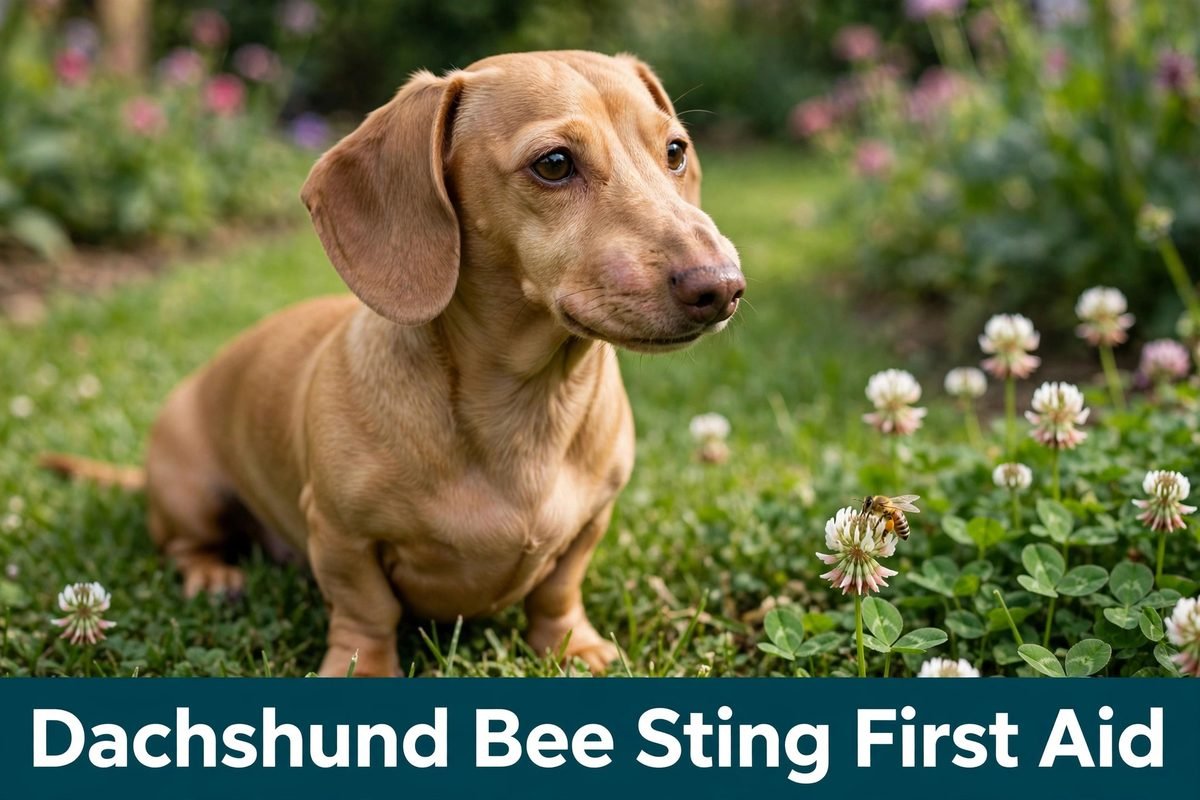
A Dachshund bee sting most often shows up on the nose, the lips, the face, or a front paw. Dachshunds explore nose-first, so they sniff flowers and fallen fruit where bees feed, and step on bees hiding in clover. A dog that snaps at a flying insect can be stung inside the mouth or on the tongue, which is harder to see. The first sign is usually a sudden yelp, a jump backwards, or a shake of the head, followed by pawing at the face.
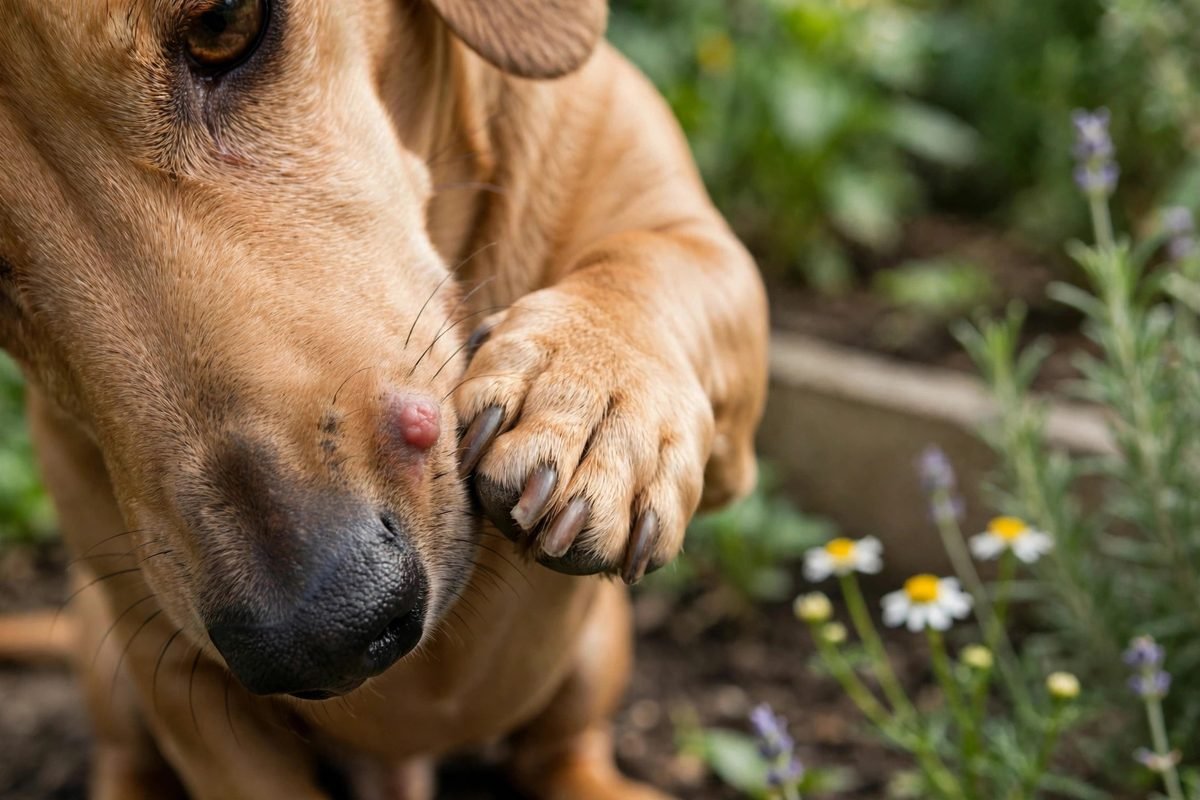
The sting site turns red and swollen within minutes. A sting on the muzzle can puff up one side of the face, and a sting on the paw can make the foot thick and tender, so the dog limps. The skin may feel warm, and the dog may flinch when the spot is touched gently. Some dogs drool or rub their face along the floor. A small dark dot in the middle of the swelling may be a stinger left behind by a honeybee, and it matters because the stinger keeps pumping venom while it stays in the skin.
Not every insect bite looks the same. A honeybee sting hurts sharply at first, with a red, raised bump and a stinger often left in the skin. A wasp sting hurts in a similar way but usually leaves no stinger, and wasps can sting more than once, so a dog that disturbs a wasp nest may come back with several stings. Ants bite and sting in groups, leaving clusters of small red bumps, often on the paws or belly. If the dog was stung near a nest, count the stings if you can, because many stings at once are more dangerous than one.
2. First Steps Right After the Sting
The first step after a Dachshund bee sting is to move the dog away from the bees. Pick the dog up calmly and carry it indoors, well away from the flowers or the nest where it was stung, because bees release a scent that can draw more bees to the same spot. Do not swat at the bees with your hands near the dog’s face, and do not run with the dog through the area where the bees are. Once the dog is in a safe place, speak softly and keep it still.
Look at the sting site in good light. Part the fur gently and look for a stinger, a tiny dark splinter in the skin. If you see one, scrape it out sideways with a flat edge, such as a bank card or a clean fingernail. Scrape, do not squeeze, because squeezing can push more venom into the skin. If the stinger is hard to reach, or the dog will not let you near the spot, do not force it. A wasp sting leaves no stinger, so if you cannot see one, do not keep digging at the skin.
Once the stinger is out, or once you are sure there is none, cool the spot. Hold a clean cloth dampened with cool water against the swelling for five to ten minutes, and repeat it over the next hour if the dog lets you. Frozen peas wrapped in a cloth work too, but never put ice straight on the skin. While the cloth is on, check the other paws, the belly, and inside the mouth for more stings. The cut paw first aid guide covers the same calm-first approach.
3. Easing Swelling and Soreness at Home
For a single mild Dachshund bee sting, the safest home care is simple: cool the spot, keep it clean, and keep the dog from making it worse. A cool, damp cloth held against the swelling for a few minutes, several times over the first hour, is the main treatment. Wipe the sting site gently with plain water, and do not rub or scrub it, because rubbing spreads the venom. If the sting is on a paw, keep it clean and dry indoors, and skip the next walk until the dog walks without limping.
The hardest part of home care is stopping the dog from licking and chewing the sting. A Dachshund that licks a sting site without stopping can open the skin, cause an infection, and keep the swelling going for days. A soft cone or a light sock over a stung paw can break the habit for a few hours, and a calm play session can distract the dog from the itch. If the skin breaks open, or the spot starts to ooze or feel hot after the first day, that is a sign of infection, and the dog needs a veterinarian.
Some owners ask about baking soda paste, vinegar, or creams for a Dachshund bee sting, and the honest answer is that none of them is needed for a mild sting, and some can do harm. A baking soda paste can irritate broken skin. Vinegar stings on sore skin. Calamine lotion and human anti-itch creams are not made for dogs, and a dog that licks them off can swallow ingredients that upset its stomach. Plain cool water, a clean cloth, and time are safer than any home remedy. Never give a human medicine without a veterinarian’s advice, because painkillers such as ibuprofen and paracetamol are dangerous for dogs.

4. Watching for an Allergic Reaction
Most Dachshund bee sting cases stay mild, but a small number of dogs have an allergic reaction, and that is the part that needs watching. A mild allergic reaction shows up as swelling that spreads beyond the sting site, hives over the body, intense itching, or a puffy face and ears. The dog may rub its face on the floor or scratch without stopping. These signs can appear within minutes or over the first hour, and they are a reason to call a veterinarian, even if the dog is still breathing normally.
A severe allergic reaction is an emergency, and it looks different from a mild one. The signs include rapid swelling of the face, lips, tongue, or throat, trouble breathing, pale or blue gums, vomiting, sudden weakness, or collapse. A dog stung many times, or inside the mouth or throat, is at higher risk, because the swelling can block the airway. A dog that has reacted badly to a sting before is also at higher risk. If any of these signs appear, get the dog to a veterinarian or an emergency clinic straight away, and call ahead so the clinic is ready.
While you are on the way to the clinic, keep the dog calm and cool. Carry the dog rather than letting it walk. Do not offer food or water if the dog is struggling to breathe or swallow. Watch the dog over the next day too, because a sting site that keeps swelling may be infected or may still hold a piece of stinger. A dog that goes stiff or cries when lifted should be watched closely too, because pain can come from the sting or from the back; in short-legged breeds, disc degeneration can begin in the first year of life, so a veterinarian should tell the difference.
5. Keeping Stings Away on Walks and at Home
Preventing a Dachshund bee sting starts in the garden. Bees visit flowers, clover, and fallen fruit, so a lawn full of flowering clover is the most common place for a sting. Mowing the lawn, picking up fallen fruit, and keeping the dog away from flowering shrubs while they are in full bloom all lower the risk. Check for wasp nests in sheds, fences, and under eaves in summer, and have a nest removed by a professional. Keep the dog away from bins and compost heaps, where wasps gather.
On walks, a lead is the best protection. A Dachshund on a lead cannot run into a flower bed or a nest, and the owner can steer it away from clover and flowering hedges. Avoid long grass and wildflower meadows in the middle of a hot day, when bees are most active, and walk in the morning or evening instead. If the dog snaps at flying insects, a treat or a toy can distract it before it ends in a sting on the tongue. A dog stung before may be nervous around bees, so keep walks on paths and away from flower beds.
At home, a few small habits help. Keep windows fitted with screens in summer so bees do not come indoors. Do not leave sweet drinks, jam, or fruit out where the dog can reach them, because the smell draws wasps. Teach the dog to leave flying insects alone with a calm “leave it” and a treat for turning away. Keep the first aid kit in one place, with a clean cloth, a flat card for scraping out a stinger, and the veterinarian’s phone number on the box. The pet first aid kit guide lists what to keep in the kit and where to store it.

Dachshund Bee Sting: Home First-Aid Checklist
| Step | What to Do | What to Avoid |
|---|---|---|
| Move away | Carry the dog indoors, away from bees and nests | Do not swat at bees near the dog’s face |
| Find the stinger | Scrape it out sideways with a flat card | Do not squeeze it with tweezers or fingers |
| Cool the spot | Hold a cool, damp cloth on it for 5 to 10 minutes | Do not put ice straight on the skin |
| Watch closely | Check breathing, swelling, and behaviour for hours | Do not leave the dog alone after a sting |
| Call for help | Call a veterinarian for fast swelling or breathing trouble | Do not give human medicine without advice |
Common Mistakes
- Squeezing a stinger out with tweezers, which pushes more venom into the skin.
- Giving a human painkiller without a veterinarian’s advice, when the dose can harm a small dog.
- Rubbing the sting site hard or applying vinegar or creams that irritate the skin and get licked off.
- Leaving the dog alone after a sting, so a spreading allergic reaction is noticed too late.
- Disturbing a wasp nest with the dog nearby, or letting the dog chase flying insects.
- Waiting to see if fast swelling or breathing trouble passes, when those signs need emergency care at once.
When to Call Your Vet
Call a veterinarian at once if the dog’s face, lips, tongue, or throat swells fast, if the dog struggles to breathe, wheezes, vomits, or collapses, or if it was stung many times or stung inside the mouth. Call the same day if the swelling spreads, if hives appear, if the dog is in clear pain, or if the swelling has not started to go down after a day. A veterinarian can advise on safe medicine, check for a stinger left in the skin, and treat an infection if one starts. This guide is general information only and not a diagnosis; only a veterinarian who examines the dog can say what it needs.
Pin This: Bee Sting First Aid
Save this guide before the next garden day: a Dachshund bee sting needs a calm move away, a stinger scraped out, a cool cloth, and close watching. Keep the first aid kit ready, know the vet’s number, and call at once for fast swelling or breathing problems.
Frequently Asked Questions
How long does a Dachshund bee sting stay swollen?
A mild Dachshund bee sting usually swells most in the first hour, then goes down over one to two days. A sting on the face or paw may look worse than one on the body. If the swelling is still growing after a day, or the spot feels hot and hard, call a veterinarian.
Should I pull a bee stinger out with tweezers?
No, do not pull a stinger out with tweezers, because squeezing it can push more venom into the skin. Scrape it out sideways with a flat edge, such as a bank card, and then cool the spot with a damp cloth. If you cannot see a stinger, leave it alone and let a veterinarian remove it safely.
Can I give my Dachshund an antihistamine after a bee sting?
Only if a veterinarian tells you to, because the dose depends on the dog’s weight, and some human products are not safe for dogs. A veterinarian can advise on a safe product and dose over the phone. For a mild sting, a cool cloth and watchful waiting are the safe home steps.
What if my Dachshund was stung inside the mouth?
A sting inside the mouth or on the tongue is more worrying than a sting on the skin, because the swelling can affect swallowing and breathing. Look inside the mouth if the dog lets you, keep the dog calm, and call a veterinarian at once. Do not offer food until the swelling has gone down.
How can I stop my Dachshund getting stung again?
Mow clover lawns, pick up fallen fruit, and walk on a lead away from flower beds in the heat of the day. Teach a calm “leave it” for flying insects, and keep the first aid kit in one place with the veterinarian’s number on it.
Conclusion
A Dachshund bee sting is a frightening moment, but most stings are mild and most dogs recover in a day or two with simple care. The steps are short: move the dog away, scrape out a stinger without squeezing it, cool the spot, keep the dog from licking it, and watch the breathing and swelling for a few hours. Fast swelling of the face or throat, trouble breathing, vomiting, or collapse mean emergency care at once. With a calm plan and a ready first aid kit, a sting in the garden stays a short scare.