Dachshund Seasonal Shedding Routine at Home: Guide
Quick Answer
- Dachshund seasonal shedding is the heavier loss of loose coat hair that comes with the change of seasons, most often in spring and autumn.
- Short-haired Dachshunds shed a little all year, while long-haired and wire-haired types shed more, and need more brushing.
- A Dachshund seasonal shedding routine at home means short, regular brushing and a calm grooming habit the dog accepts.
- Watch for bald patches, sore skin, or itching, because shedding alone is normal, but shedding with sore skin is not.
- Call a veterinarian if the coat thins in patches, the skin is red or broken, or the dog is losing weight or seems unwell.
Contents
- 1. What Dachshund Seasonal Shedding Looks Like
- 2. Why Dachshunds Shed More in Spring and Autumn
- 3. The Weekly Brushing Routine at Home
- 4. Bathing, Food, and the Home During Shedding Season
- 5. When Shedding Is a Sign of Something Else
- Dachshund Seasonal Shedding: Weekly Routine Checklist
- Common Mistakes
- When to Call Your Vet
- Pin This: Seasonal Shedding Routine
- Frequently Asked Questions
- Conclusion
1. What Dachshund Seasonal Shedding Looks Like
Dachshund seasonal shedding shows up first on the furniture. The sofa, the dog’s bed, and dark clothes pick up short hairs, and a quick brush of the hand over the coat lifts loose hair that was not there last week. The dog itself looks the same, eats the same, and plays the same, which is the first clue the shedding is seasonal. The coat may look a little thinner or duller for a week or two, and then it settles as the new coat grows in.
The amount of hair depends on the coat type. A smooth-haired Dachshund sheds short, stiff hairs all year, with a heavier shed in spring and autumn. A long-haired Dachshund sheds longer, softer hairs, and the hair gathers behind the ears, under the belly, and on the legs. A wire-haired Dachshund sheds less loose hair, but the coat can look rough and untidy when the old coat is ready to come out. All three types shed, and none of them sheds nothing, so a home with a Dachshund always has some hair in it.
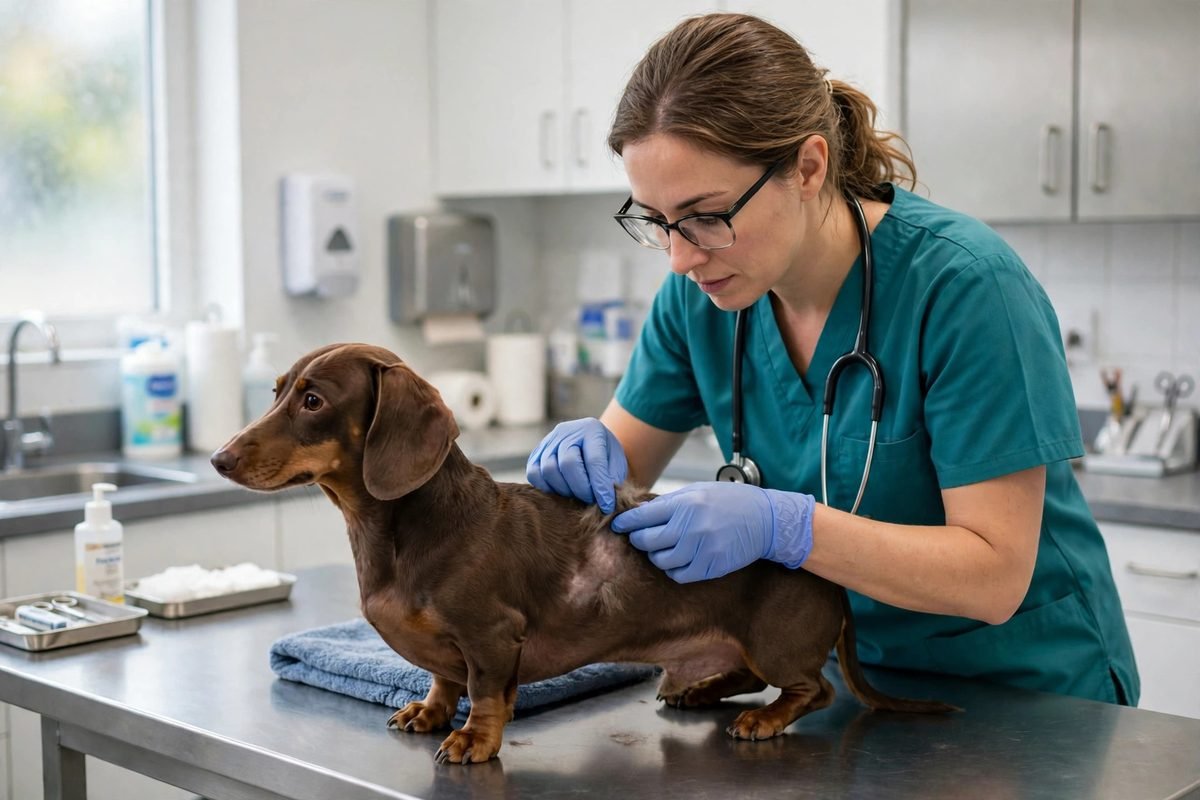
Shedding is not the same as hair loss from illness. Seasonal shedding spreads evenly over the body, the skin underneath looks normal, and the dog feels well. Hair loss from illness comes in patches, often with red, sore, or flaky skin, and the dog may itch, seem tired, or lose weight. If the coat thins in one place, or the skin looks sore, that is not seasonal shedding, and the dog needs a veterinarian. A short note of when the shedding started, and a look at the skin under the coat, is the best way to tell the two apart.

2. Why Dachshunds Shed More in Spring and Autumn
Dogs grow a thicker coat for winter and a lighter coat for summer, and the change happens in spring and autumn. As the days get longer and warmer in spring, the dog drops the thick winter coat, and the loose hair comes out in large amounts over a few weeks. In autumn the dog drops the light summer coat and grows a thicker one for the cold, and the shedding rises again. Indoor dogs shed more evenly through the year, because the heating and the lights blur the seasons, but most still shed more at these two times.
Daylight and temperature drive the change, not the calendar alone. A dog that spends most of its time indoors, under warm lights, may shed heavily in the middle of winter, while a dog that spends time in the garden may shed in clear spring and autumn waves. A sudden change, such as a move to a warmer home, can also trigger a shed. None of this is a problem on its own. It is the coat doing what coats do, and the job at home is to help the loose hair out, not to stop the shedding.
Other things can add to a seasonal shed. A female dog may shed heavily after a season, and a dog that has been unwell may shed more while its coat recovers. Stress can add to shedding too: a house move, building work, or a new pet can make a dog shed more for a few weeks. Age plays a part too, because puppies shed their soft coat as they grow, and older dogs may shed more as their coat thins. If the shedding comes with sore skin, tiredness, or weight loss, the cause may be more than the season, and a veterinarian should take a look.
3. The Weekly Brushing Routine at Home
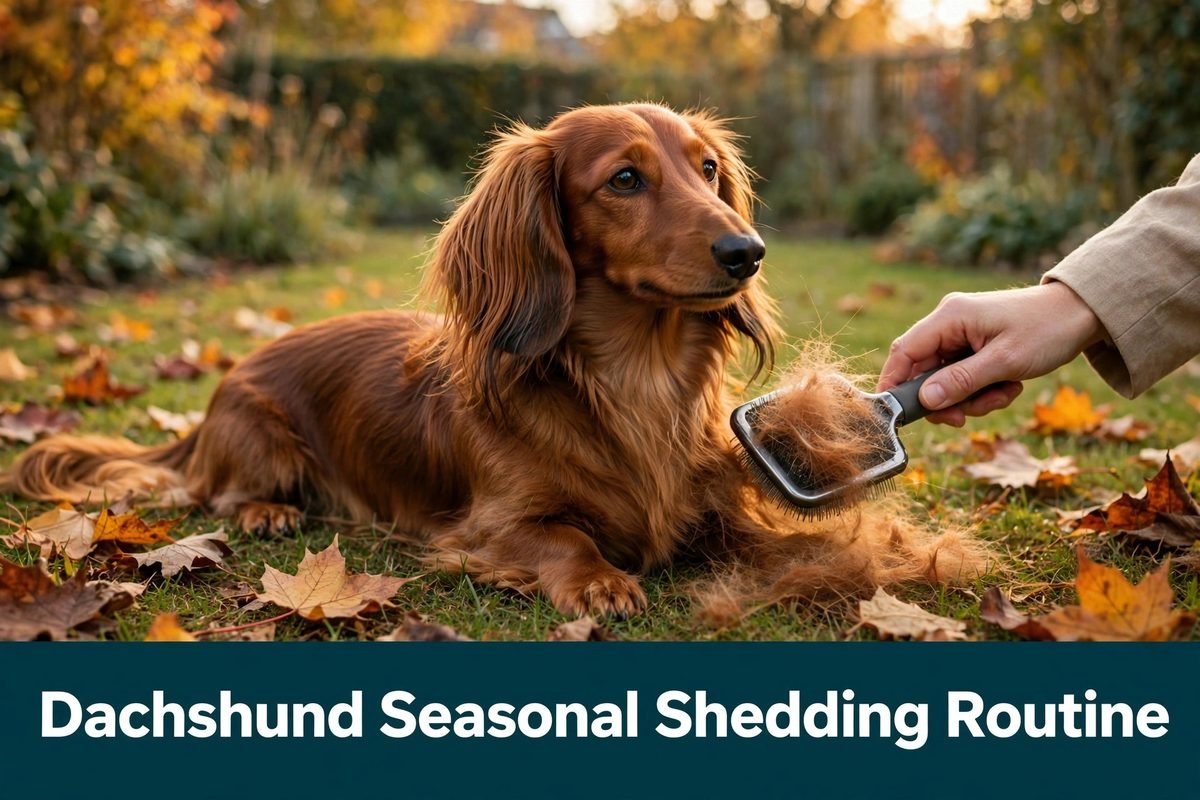
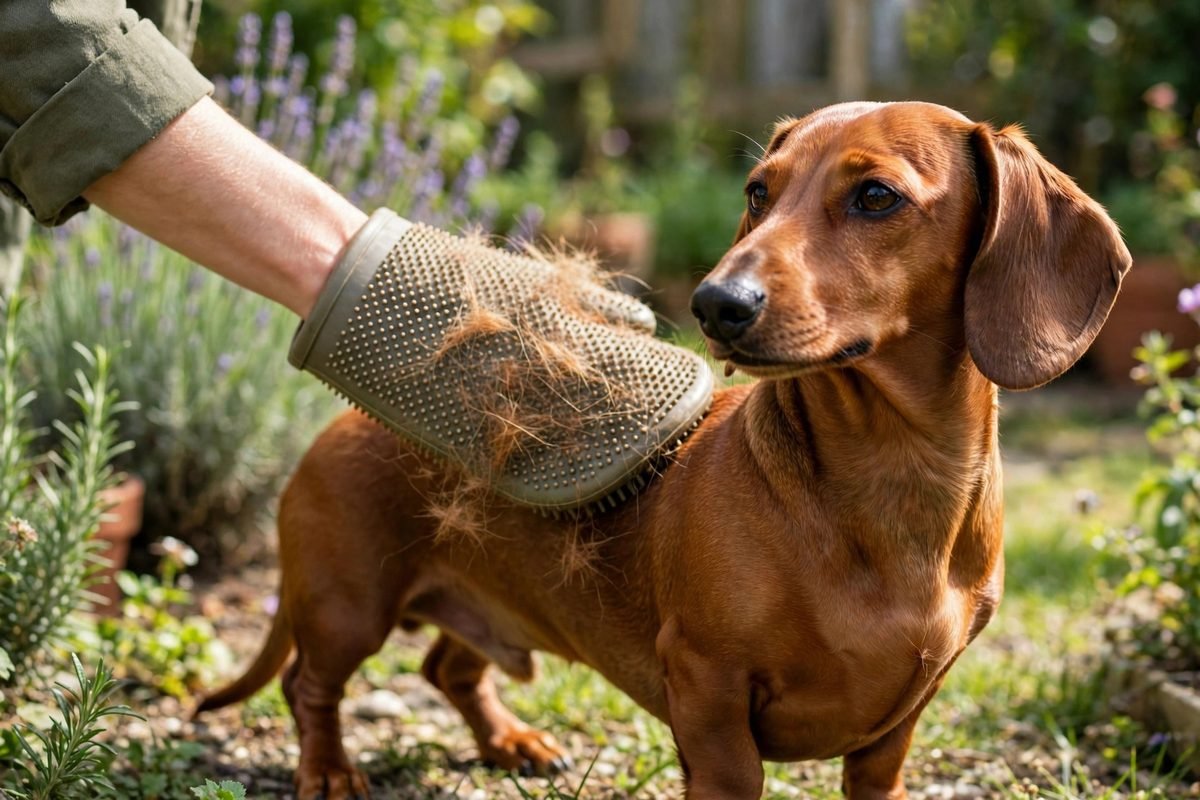
The heart of a Dachshund seasonal shedding routine is short, regular brushing. Brush a smooth-haired Dachshund two or three times a week during shedding season, and a long-haired or wire-haired Dachshund every other day, or daily if the coat knots easily. Keep each session short, five to ten minutes, and brush in the direction the hair grows, with a light hand. The aim is to lift loose hair before it lands on the sofa, and to keep the coat free of knots, not to pull hard at the skin.
Use the right tool for the coat. A rubber grooming mitt or a soft bristle brush suits a smooth coat, and it lifts loose hair without scratching the skin. A slicker brush or a wide-toothed comb suits a long coat, and it works through the feathering behind the ears and on the legs, where knots form first. A wire coat needs a comb and a stripping tool, used gently, and the dead top coat can be lifted out a little at a time. The grooming brush and nail clipper guide explains which tools fit each coat type, and how to hold them so the dog stays comfortable.
Make brushing a calm habit the dog accepts. Brush at the same time of day, in the same quiet place, and give the dog a small treat at the start and end. Talk softly, keep the strokes slow, and stop if the dog flinches, because a knot pulled hard will make the dog dread the next session. Check the skin as you brush: part the coat and look for redness, flakes, sores, or lumps. A brush-out on the balcony or in the garden keeps the loose hair out of the house, and a quick wipe with a damp cloth after brushing picks up the last loose hairs.
4. Bathing, Food, and the Home During Shedding Season
Bathing helps during shedding season, but only in moderation. A bath with a mild dog shampoo, once every few weeks, loosens dead hair and washes it away, and a brush-out after the bath lifts even more. Do not bathe the dog every week, because too much washing dries the skin and can make shedding worse. Rinse the coat well, dry the dog with a towel, and brush it once it is dry, because wet hair knots easily. If the skin is red or sore, skip the bath and ask a veterinarian first.
Food plays a quiet part in coat health. A dog fed a steady, measured diet with enough fat and protein grows a stronger coat, and a coat that is well fed sheds less in ragged clumps. Do not add oils, eggs, or supplements to the food without a veterinarian’s advice, because the wrong extra can upset the stomach or unbalance the diet. Fresh water matters too, because a dog that drinks too little can have dry skin and a dull coat. Keep the meals steady, the water fresh, and the treats counted, and the coat will look after itself.
The home needs a routine as well. Vacuum the dog’s bed, the sofa, and the rugs more often during shedding season, and wash the dog’s bedding weekly so loose hair does not build up. A lint roller by the door keeps dark clothes wearable, and a quick daily sweep of the dog’s floor takes a minute. Keep the dog off the bed during the heaviest shedding weeks if the hair bothers you, and give it a clean blanket of its own instead. The coat and skin care guide covers the daily habits that keep the coat and skin healthy between shedding seasons.
5. When Shedding Is a Sign of Something Else
Most Dachshund seasonal shedding is normal, but some shedding is a sign of a problem. The warning signs are bald patches, hair that comes out in clumps when touched, skin that is red, flaky, sore, or smelly, and itching that will not stop. A dog that scratches, licks, or chews at its skin while it sheds is not just changing its coat. A dog that loses weight, seems tired, or drinks and eats much more or less than usual while shedding heavily should be checked too, because the coat is often the first place a health problem shows.
Allergies are a common cause of problem shedding. A dog that sheds heavily and itches at the same time may be reacting to food, pollen, dust, or something that touches the skin. Hormone problems can thin the coat as well, often on both sides of the body at once, with the skin looking dark or thin. Skin infections, mites, and fleas can all cause patchy hair loss, and they need treatment, not brushing. A dog that has been on medicine, or has just had a season, may shed heavily for a while; tell the veterinarian about it.
If the shedding looks wrong, keep a record before the vet visit. Note when it started, where the coat is thinning, what the skin looks like, and whether the dog itches, eats less, or seems tired. Take a photo of the worst patch in good light, because a photo shows change better than memory. Do not try to treat patchy hair loss at home with creams, oils, or shampoos made for people, because they can make the skin worse. In short-legged breeds, disc degeneration can begin in the first year of life, so a dog that sheds heavily and also moves stiffly, refuses stairs, or cries when lifted should be checked for back pain as well, because a dog in pain can shed more and groom less.
Dachshund Seasonal Shedding: Weekly Routine Checklist
| Task | How Often | Notes |
|---|---|---|
| Brush the coat | 2 to 3 times a week, daily for long coats | Short sessions, in the direction of hair growth |
| Check the skin | Every brushing session | Look for redness, flakes, sores, or bald patches |
| Bath | Once every few weeks | Mild dog shampoo, rinse well, brush when dry |
| Wash bedding | Weekly | Keeps loose hair and dust out of the bed |
| Vacuum and sweep | Daily in heavy shedding weeks | Focus on the sofa, rugs, and sleeping spots |
Common Mistakes
- Brushing hard or pulling at knots, which hurts the dog and makes it dread grooming.
- Bathing the dog every week during shedding season, which dries the skin and can make shedding worse.
- Using a human shampoo, brush, or hair product on the dog, which can irritate the skin.
- Shaving a Dachshund to stop shedding, which removes the coat that protects the skin and does not stop hair loss.
- Adding oils or supplements to the food without a veterinarian’s advice, when the diet may already be balanced.
- Ignoring bald patches or sore skin as seasonal shedding, when they need a veterinarian.
When to Call Your Vet
Call a veterinarian if the coat thins in patches, if hair comes out in clumps, if the skin is red, flaky, or sore, or if the dog itches without stopping. Call sooner if the dog loses weight, seems tired, or eats and drinks much more or less than usual while shedding. A veterinarian can check for allergies, skin infections, mites, and hormone problems, and can advise on a diet and routine that fits this dog. This guide is general information only and not a diagnosis; only a veterinarian who examines the dog can say what the shedding means.
Pin This: Seasonal Shedding Routine
Save this routine for spring and autumn: brush little and often, check the skin as you brush, bathe only every few weeks, and keep the bedding clean. Call a veterinarian if the coat thins in patches or the skin looks sore.
Frequently Asked Questions
How long does Dachshund seasonal shedding last?
Dachshund seasonal shedding usually lasts two to four weeks in spring and again in autumn, while the old coat comes out and the new coat grows in. Indoor dogs may shed more evenly all year, with a heavier patch at these times. If heavy shedding goes on for more than a month, or the coat thins in patches, call a veterinarian.
Do smooth-haired Dachshunds shed less than long-haired ones?
Smooth-haired Dachshunds shed shorter hairs, so the shedding is less visible, but they still shed all year round. Long-haired Dachshunds shed longer hairs that gather in tufts and need more brushing. Wire-haired Dachshunds shed the least loose hair, but their coat needs combing to look tidy.
Should I shave my Dachshund during shedding season?
No, do not shave a Dachshund to stop shedding. The coat protects the skin from sun, cold, and scrapes, and shaving does not stop hair loss; it only makes the hairs shorter. Regular brushing, a bath every few weeks, and a clean home routine manage shedding far better than shaving.
What brush is best for a shedding Dachshund?
A rubber grooming mitt or a soft bristle brush suits a smooth coat, a slicker brush or a wide-toothed comb suits a long coat, and a comb suits a wire coat. Brush gently in the direction of hair growth, keep sessions short, and stop if the dog flinches. The right tool lifts loose hair without scratching the skin.
Can food change how much my Dachshund sheds?
Food can affect coat health, because a dog fed a steady, measured diet grows a stronger coat. Do not add oils, eggs, or supplements without a veterinarian’s advice, because the wrong extra can upset the stomach. Fresh water matters too, because a dog that drinks too little can have dry skin and a dull coat.
Conclusion
Dachshund seasonal shedding is a normal part of the year, and a short weekly routine keeps it under control. Brush little and often with the right tool, check the skin as you brush, bathe only every few weeks, and keep the bedding clean during the heavy weeks. Do not shave the dog, do not bathe it every week, and do not add extras to the food without advice. If the coat thins in patches, the skin looks sore, or the dog seems unwell, the shedding may be more than seasonal, and a veterinarian should take a look. With a calm routine, the spring and autumn sheds pass quickly, and the new coat comes in glossy and healthy.