
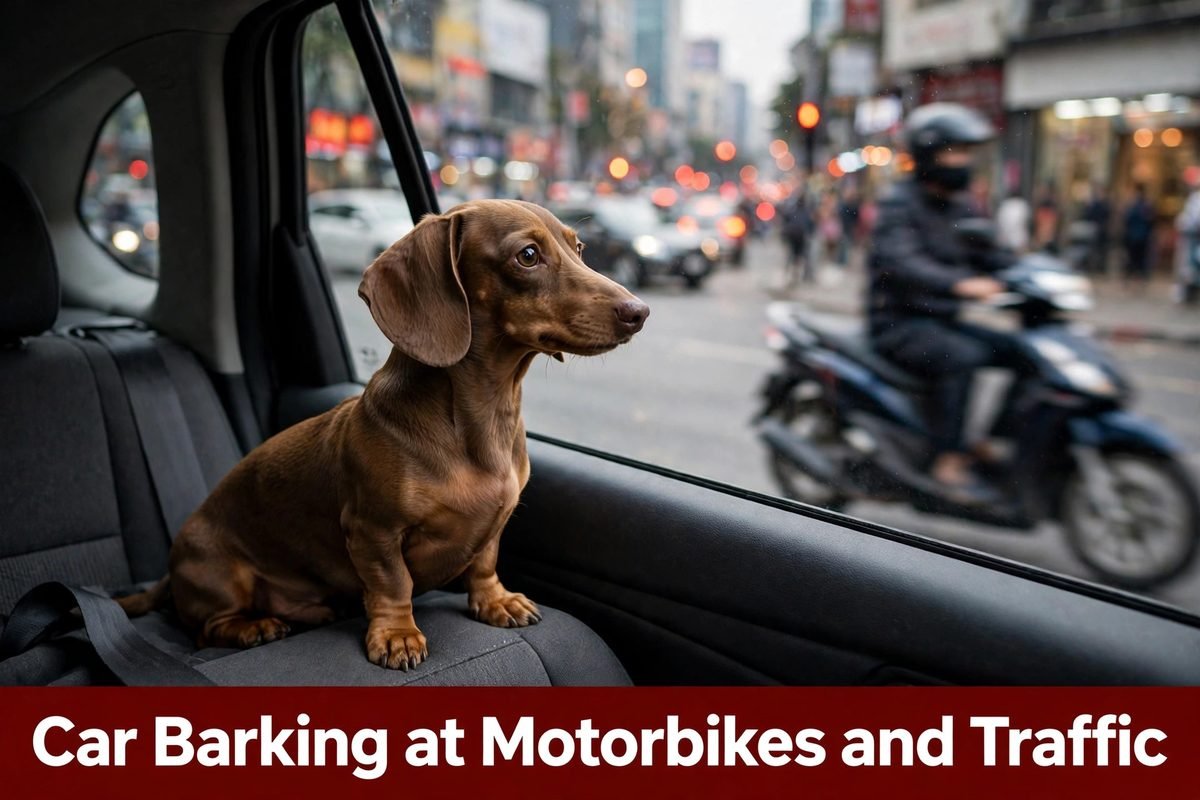
Dachshund Barking in the Car at Motorbikes and Traffic
Quick Answer
- A Dachshund barks at motorbikes and loud traffic in the car because the bike appears suddenly, the engine is loud, and the dog cannot move away, so barking is its way of pushing the noise back.
- Use a secured car seat or harness, a sunshade on the window, and a calm spot in the back seat, and keep trips short while the dog learns.
- Practice on quiet streets first, reward quiet behavior when a bike passes at a distance, and build up to busy roads a little at a time.
- Contact a veterinarian if the dog shakes, vomits, drools heavily, or shows signs of pain or distress in the car.
Contents
- 1. Why Motorbikes and Loud Traffic Trigger Car Barking
- 2. A Safe, Calm Car Setup for a Barking Dachshund
- 3. Short Practice Drives: Building Calm Step by Step
- 4. Handling Busy Roads, Horns, and Sudden Noise
- 5. Keeping Car Trips Calm Every Day
- Car Barking Comparison Checklist
- Common Mistakes
- When to Call Your Vet
- Pin This: Car Barking Checklist
- Frequently Asked Questions
- Conclusion
A motorbike passing close to a car window is one of the sharpest triggers a Dachshund can meet on the road. The bike appears suddenly, the engine is loud, and the dog is strapped into a small space where it cannot move away, so it barks, because barking is the only way it can answer a loud thing that rushes past the window. Loud traffic adds horns, lorries, and sudden braking, which keeps the dog on alert for the whole trip. This article is about barking in the car at motorbikes and loud traffic, which is different from general car barking or barking at cyclists and joggers on a walk, and it gives a plan that fits a normal family car on busy roads. It is general information only, not a diagnosis, and a dog that shakes, vomits, or drools heavily in the car needs a veterinarian, not a new rule.
1. Why Motorbikes and Loud Traffic Trigger Car Barking
Motorbikes are hard for a dog to read, because they are fast, loud, and close. A car passes at a steady speed, but a motorbike weaves through traffic, appears in the mirror without warning, and roars past the window in a second. A Dachshund sitting in the back seat sees a shape rushing toward the car, hears a loud engine, and feels the car shake, and it barks, because the bike looks like a threat that is coming straight at the car. The barking often starts before the bike even passes, because the dog hears the engine first, and it can go on after the bike has gone, because the dog is still excited.
Loud traffic makes the problem worse, because the dog never gets a quiet moment to settle. Horns, sirens, lorries, and stop-start traffic keep the noise level high, and the dog stays on alert for the whole trip. A dog that is already excited by a motorbike will bark at the next loud sound, and then at the next, until the whole trip is one long barking session. The dog may also be carsick, which makes everything worse, because a sick dog is a stressed dog, and a stressed dog barks more. A dog that drools, licks its lips, or vomits in the car may be feeling sick, not just excited, and that needs a different fix.

2. A Safe, Calm Car Setup for a Barking Dachshund
Set up the car before the next trip, not during it. Use a secured car seat or a crash-tested harness that keeps the dog in the back seat, because a dog that can move around the car is a dog that can reach the window, the front seat, and the driver. A car seat that lifts the dog a little can help, because the dog can see out of the window without standing on the seat, and a dog that can see the road calmly barks less than a dog that is startled by every passing shape. Keep the dog’s usual blanket in the car seat, so the car smells familiar.
Check the dog for carsickness before starting the training, because a sick dog cannot learn to be calm in the car. A dog that drools heavily, licks its lips, yawns a lot, or vomits on short trips may be carsick, and that needs a veterinarian, not a training plan. The guide to calm behavior for barking in the car covers the same safe setup of a secured seat, a sunshade, and short trips, and the same care helps here, because a dog that feels safe and settled in the car is a dog that barks less at what passes the window.
3. Short Practice Drives: Building Calm Step by Step
Start with the car parked, not moving, and let the dog settle in its car seat with a chew for five minutes. Sit in the car with the dog, keep the engine off, and reward quiet behavior with a small treat. If the dog is calm in a parked car, start the engine, and keep the car still for another five minutes, so the dog gets used to the sound and the shake of the engine. A dog that is calm in a parked car with the engine on is ready for a short drive, and a dog that barks in a parked car needs more practice before the car moves.
Build up to busier roads a little at a time, and keep the steps small. A quiet street, then a road with a few cars, then a road with a bus stop, then a busy road with motorbikes, is a sensible order, and each step should last a few days before the next one. The guide to calm behavior for fireworks and loud noises uses the same idea of starting at a low level of noise and building up slowly, and the same rule works in the car, because a dog that learns to stay calm at a low level of traffic can learn to stay calm at a higher level, one step at a time.

4. Handling Busy Roads, Horns, and Sudden Noise
Busy roads need a simple plan that the driver can follow without taking eyes off the road. Keep the dog in its car seat in the back, keep the sunshade up, keep the radio on low, and keep a chew ready for the busy stretch. If a motorbike is about to pass, the passenger can give the dog a small treat just before the bike passes, so the dog links the sound of the bike with a treat, not with barking. If the dog barks, the driver should keep driving calmly, and the passenger should wait for a pause and then reward the pause, because shouting at the dog while driving is unsafe and makes the barking worse.
Plan the route to avoid the worst traffic when the dog is still learning. A quieter road that takes five minutes longer is a better training route than a busy road that sets the dog barking for the whole trip. Avoid rush hour for practice drives, and use the busy road only when the dog is calm on the quieter road. A dog that has a good trip on a quiet road is a dog that is ready for a slightly busier road, and a dog that has a bad trip on a busy road needs a quieter road the next time, not a longer one.
5. Keeping Car Trips Calm Every Day
Once the barking starts to fade, protect the routine by keeping car trips short, calm, and regular. Keep the same car seat, the same blanket, the same sunshade, and the same chew for every trip, because a dog that knows the car setup trusts it, and a dog that trusts the car barks less. Keep trips to places the dog likes, such as a quiet park or a friend’s house, so the car links with good things, not only with the vet or a long journey. A dog that enjoys the destination is a dog that settles faster in the car.
Watch for small signs that the dog is settling, and build on them. A dog that watches a motorbike pass without barking, that lies down in its car seat on a busy road, or that takes a chew on a trip it used to bark through is making progress, even if it still barks at a very loud bike. Reward those quiet moments with a calm word or a small treat at the end of the trip, and keep the trips short and regular. A dog that trusts the car routine stops testing it, and a dog that stops testing it stops barking at the traffic.
Plan for setbacks, because a new routine is fragile in the first month. A very loud motorbike, a traffic jam, or a long trip can bring the barking back for a day, and that does not mean the plan has failed. Go back to the basics for a day or two: shorter trips, quieter roads, the sunshade up, and a chew ready. Disc degeneration in short-legged breeds can begin in the first year of life, so lift the dog carefully in and out of the car and use a ramp or steps for a high car, because a stressed dog that jumps down from a car seat can hurt its back as well as bark. Keep the routine steady, and the dog will learn that motorbikes and traffic are just part of the road.

Car Barking Comparison Checklist
| Approach | Best for | Limit to watch |
|---|---|---|
| Secured car seat with a familiar blanket | Every car trip | Keep the dog in the back seat |
| Sunshade on the window | Busy roads with motorbikes | Keep the window mostly closed |
| Short drives on quiet streets first | First weeks of training | Keep drives under ten minutes |
| Treat just before a bike passes | When a passenger can help | Never treat while the dog is barking |
| Quieter route, avoid rush hour | Practice drives | Build up to busy roads slowly |
Common Mistakes
- Letting the dog sit loose in the car where it can reach the window.
- Taking the dog straight onto a busy road on the first training trip.
- Shouting at the dog while driving.
- Opening the window wide so the dog can bark at passing bikes.
- Skipping the chew and the sunshade because the trip is short.
- Forgetting to check for carsickness before starting training.
- Giving up on the routine after one loud motorbike sets the dog off.
When to Call Your Vet
Contact a veterinarian if the dog shakes, vomits, drools heavily, pants hard, or shows signs of pain or distress in the car, and seek urgent help if the dog collapses, cannot breathe normally, or shows sudden weakness in the back legs. Contact a veterinarian also if the dog is stiff, slow to move, or cries when picked up after a car trip, because a long-backed breed can hurt its back while jumping in or out of a car. This article gives general information only and does not diagnose any condition. A veterinarian can check for carsickness, pain, anxiety, or a health problem, and advise whether a calmer routine, a training plan, or a health check is the right next step for that individual dog. Do not delay veterinary help for a dog that is clearly distressed or in pain.
Pin This: Car Barking Checklist
- Secured car seat in the back, familiar blanket inside.
- Sunshade up, window mostly closed, soft music on low.
- Chew ready before the car starts moving.
- Start with short drives on quiet streets.
- Reward quiet when a bike passes, never barking.
- Take a quieter route and avoid rush hour for practice.
- Lift the dog in and out of the car, use a ramp for high cars.
Frequently Asked Questions
Why does a Dachshund bark at motorbikes but not at cars?
Motorbikes are fast, loud, and close, and they appear suddenly in the mirror, while cars pass at a steady speed and a steady sound. The sudden roar and the rushing shape are harder for a dog to read, so the dog barks at the bike and ignores the car.
Should the dog be allowed to look out of the car window?
Yes, in a secured car seat, with the window mostly closed and a sunshade up, because a dog that can see the road calmly barks less than a dog that is startled by every passing shape. Never let the dog hang its head out of an open window, because that is unsafe and makes the barking worse.
How can a passenger help with car barking?
A passenger can give the dog a small treat just before a motorbike passes, and reward a quiet pause after the bike has gone. The driver should keep eyes on the road, so the passenger’s job is the dog, and the driver’s job is the driving.
What if the dog is sick in the car?
A dog that drools heavily, licks its lips, or vomits on short trips may be carsick, and that needs a veterinarian, not a training plan. Keep trips short, keep the car cool, and ask a veterinarian about carsickness before starting barking training.
How long does it take for car barking to stop?
Many dogs show clear improvement in two to three weeks of short practice drives, such as watching a bike pass without barking. Full calm on busy roads can take a month or more, and a very loud bike can bring a short setback.
Conclusion
A motorbike rushing past the window is a sudden, loud trigger in a small space where the dog cannot move away, and barking is how the dog answers it. A secured car seat, a sunshade, a chew from the first minute, short practice drives on quiet streets, and a slow build-up to busy roads will turn a barking car trip into a calm one. This article is general information only, not a diagnosis, and a dog that vomits, drools heavily, or shows signs of pain in the car needs a veterinarian. Keep the routine steady, and the dog will learn that motorbikes and traffic are just part of the road.


One Comment