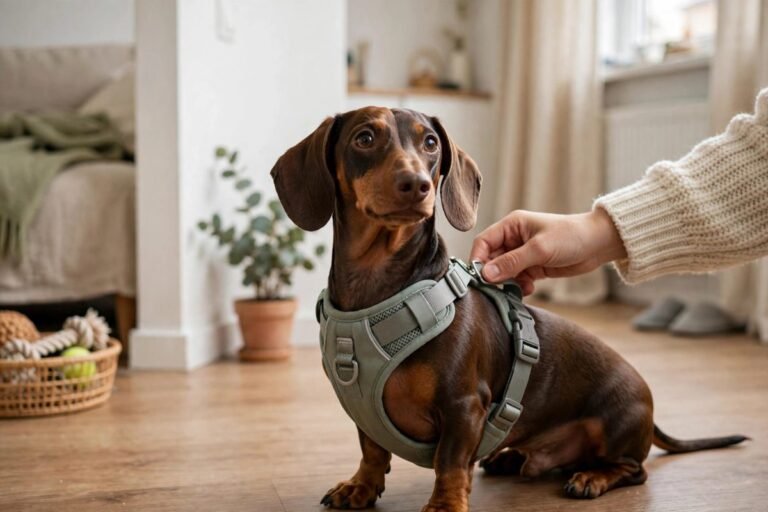
Dachshund Travel First Aid Kit for Walks and Trips
Quick Answer
- A Dachshund travel first aid kit is a small, light pouch with the basics for minor problems on a walk or a car trip: clean dressings, saline, tweezers, a towel, and the veterinarian phone number.
- Pack for the trip, not for every problem. A short walk needs a pocket pouch; a long car trip needs a larger pouch with water, a spare lead, and a blanket.
- Keep the kit in the same place every time, so it is found without thinking: by the door for walks, and in the car boot or footwell for trips.
- Check the kit once a month and after every use. Replace anything used, damp, or past its date, and keep the phone number up to date.
- Contact a veterinarian if there is heavy bleeding, a deep cut, a suspected broken bone, breathing trouble, or a bite or sting with swelling.
Contents
- 1. What a Travel Kit Is For
- 2. What to Pack in a Travel First Aid Kit
- 3. Packing the Kit for Walks and Car Trips
- 4. Using the Kit Calmly When Something Happens
- 5. Checking, Restocking, and Storing the Kit
- Travel First Aid Kit Checklist
- Common Mistakes
- When to Call Your Vet
- Pin This: Travel First Aid Kit
- Frequently Asked Questions
- Conclusion
1. What a Travel Kit Is For
A Dachshund travel first aid kit is a small pouch that turns a minor problem on a walk into a short pause instead of a panic. A cut paw, a thorn in a pad, a small graze, or a sudden bout of sickness can happen on any walk, and the first minutes matter. With a kit close by, a paw can be cleaned, a dressing can be held in place, and the dog can be kept calm while the next step is decided.
A travel kit is different from a home kit. The pet first aid kit for apartments is larger, with more supplies and room to store them on a shelf. A travel kit must be light enough to carry, small enough to fit in a pocket or a car door, and simple enough to use with one hand while holding a lead. Each item in the pouch has a clear job. The kit covers the first steps, keeps a small problem from getting worse, and buys time until a veterinarian can be reached.
The kit also helps the owner stay calm. A known pouch, in a known place, with known contents, removes the worst part of a small emergency, which is not knowing what to do next. The routine is simple: stop, sit the dog down, look at the problem, use the kit, and decide whether the walk can continue or whether it is time to go home. A Dachshund travel first aid kit is a plan for the small things that go wrong, kept ready in a pouch by the door.
2. What to Pack in a Travel First Aid Kit
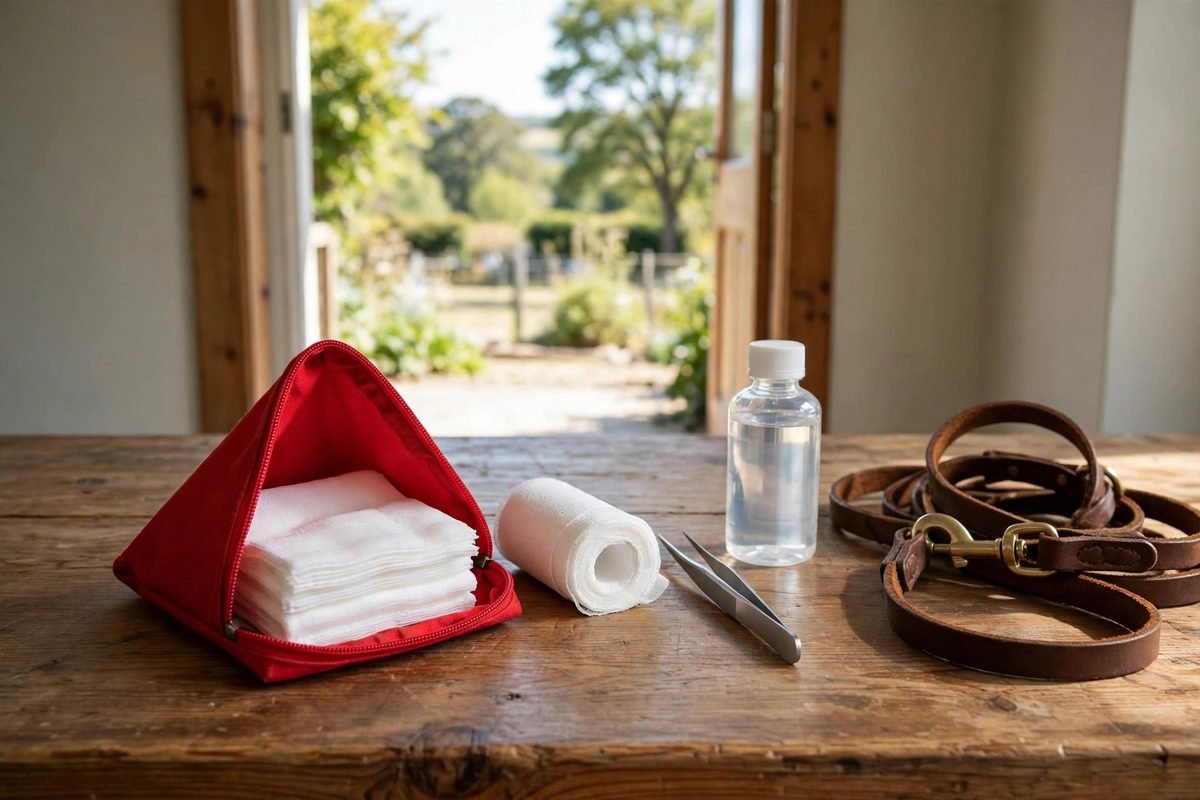
Start with cleaning and covering. Pack a small bottle of saline or plain clean water for rinsing a cut or a dirty paw, a few pieces of clean gauze, and a roll of self-adhesive bandage that sticks to itself rather than to fur. Add a small pair of blunt tweezers for a thorn or a splinter, and a pair of small scissors for cutting bandage. Pack a clean towel or a large cloth, which can dry a paw, wrap a shivering dog, or press gently on a bleeding cut. Keep everything in a waterproof pouch, so rain and mud stay out.
Add a few small extras that earn their place. A spare lead is useful if the usual lead breaks or gets tangled, and a muzzle that fits the dog can be needed if a hurt dog snaps when a sore paw is touched. Pack a small torch for evening walks, because a cut is hard to see in the dark, and a few plain poo bags, which can double as a glove or a waterproof cover. Pack a card with the veterinarian phone number, the nearest emergency clinic number, and the dog’s name and any known allergies. A phone can run out of battery, and a card still works.
Leave out anything that needs a veterinarian to use safely. Do not pack medicines, creams, or tablets unless a veterinarian has advised them for this dog and explained the dose. A cream meant for people can be harmful if licked, and a tablet given at the wrong dose can cause more harm than the original problem. Do not pack a large bottle of antiseptic that stings, because it makes a hurt dog pull away. Plain saline, clean gauze, a towel, and a phone number cover the first steps well, and the rest belongs to a veterinarian.
3. Packing the Kit for Walks and Car Trips
Pack the kit to match the trip. For a short walk around the block, a pocket pouch is enough: gauze, a small bandage, saline, tweezers, and the phone card. The pouch should fit in a coat pocket or clip to the lead bag, so it is carried without thinking. For a long walk in a park or a country path, add the towel, the torch, and a bottle of water for the dog, because a long walk is further from home and further from help. Check the kit before the walk, not during it.
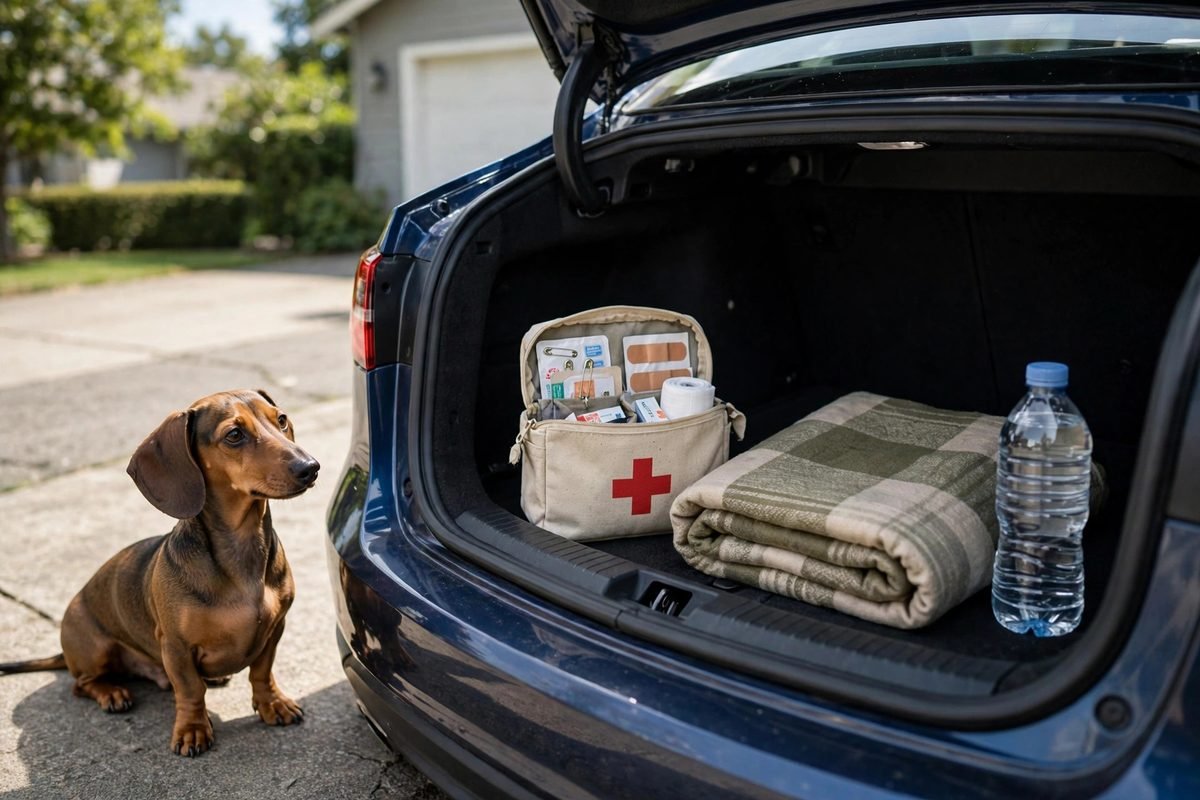
For a car trip, the kit can be larger, because weight matters less in a car. Pack the walk pouch plus a blanket, a spare lead, a bowl, and a bottle of water. Keep the kit in the car boot or the footwell, in the same place every trip, and keep a second small pouch by the door at home for walks, so the car kit is never left behind by mistake. On a long car trip, stop every couple of hours for water, a short toilet break, and a check of the paws. A dog that has been lying in a car for hours may be stiff, so let it stretch slowly before a walk.
Pack the kit so it can be opened with one hand. Put the most used items on top: gauze, bandage, and saline. Put the phone card in a clear pocket where it can be read at a glance. Keep the pouch closed with a zip or a clip, not a knot, because a knot is hard to undo with cold hands. A bright-coloured pouch is easier to find in a dark car boot, and a light, simple kit is carried far more often than a heavy one.

4. Using the Kit Calmly When Something Happens
When something happens, stop first and breathe. Sit the dog down on a flat, dry surface, hold the lead short, and speak in a low, calm voice. Look at the problem before touching it: a cut paw, a thorn, a swollen leg, or a dog that will not put weight on a paw. If the dog is in pain, keep hands away from the mouth, because even a gentle dog can snap when hurt. A muzzle can be used if the dog is snapping, but only if it fits and the dog can still breathe easily.
Clean a cut paw with saline or clean water, and let the water run over the cut rather than scrubbing it. Pick out a visible thorn or splinter with tweezers, pulling in the same direction it went in, and stop if it is deep or will not come out easily. Press a piece of gauze gently on a bleeding cut, and hold it there for a few minutes without lifting it to check. Wrap a bandage loosely around the paw, with two fingers able to fit under the wrap, and check the toes for swelling or coldness after wrapping. A bandage that is too tight does more harm than no bandage at all.
Decide what happens next. A small cut that stops bleeding, with a dog that walks normally, can be watched on the way home, with the paw checked again at the door. A cut that keeps bleeding, a deep cut, a paw that will not bear weight, or a dog that is shaking or crying needs a call to a veterinarian. The cut paw first aid guide at home covers the steps in more detail for a cut found at home, and the same steps apply on a walk. Write down what happened and when, because a veterinarian will ask.
5. Checking, Restocking, and Storing the Kit
Check the kit once a month, on the same day each month, so the habit sticks. Open the pouch, take everything out, and look at each item. Replace any gauze that is damp, torn, or dirty, any bandage that has lost its stick, and any saline that is past its date. Check the torch battery, the phone card numbers, and the zip on the pouch. Put the items back in the same order, with the most used items on top, and close the pouch. A monthly check takes five minutes and keeps the kit ready.
Restock the kit after every use, on the same day, before the pouch goes back by the door. A kit that is used once and not restocked is a kit that will fail the next time it is needed. Keep a small box of spares at home, with extra gauze, bandage, and saline, so restocking is a quick job. If the kit was used on a walk, note what was used and what worked well, and add anything that was missed.
Store the kit where it will be found. A hook by the front door works for the walk pouch, and the car boot works for the trip kit, as long as the place never changes. Keep the kit out of direct sun and away from damp. Keep the kit out of reach of the dog, because a curious Dachshund can chew a pouch open and scatter its contents. A Dachshund travel first aid kit is a small habit, not a large purchase, and the habit of checking and restocking is what makes it work.
Travel First Aid Kit Checklist
| Item | What It Is For | Where It Lives |
|---|---|---|
| Saline or clean water | Rinsing a cut or dirty paw | Top of the pouch |
| Gauze and bandage | Covering a cut; pressing on bleeding | Top of the pouch |
| Tweezers and scissors | Thorn or splinter; cutting bandage | Middle of the pouch |
| Towel or large cloth | Drying, wrapping, pressing | Car kit; long walks |
| Phone card | Vet and emergency numbers | Clear pocket |
| Spare lead and torch | Broken lead; evening checks | Car kit; long walks |
Common Mistakes
- Packing a heavy kit that is left at home because it is too much to carry.
- Packing medicines or creams without a veterinarian advising them for this dog.
- Forgetting the phone card, so the veterinarian number is lost when the phone battery dies.
- Wrapping a bandage too tightly, so the toes swell or feel cold.
- Scrubbing a cut instead of rinsing it gently with saline or clean water.
- Using the kit once and not restocking it the same day.
- Keeping the kit in a different place every trip, so it cannot be found in a hurry.
When to Call Your Vet
Contact a veterinarian if there is heavy bleeding, a deep cut, a suspected broken bone, breathing trouble, a bite or sting with swelling, or a dog that cannot put weight on a paw. Contact a veterinarian urgently if the dog collapses, has a seizure, or is in severe pain. A veterinarian can advise whether the dog should be seen at once or watched at home, and can give the next steps over the phone. Disc degeneration in short-legged breeds can begin in the first year of life, so a dog that will not walk, yelps when lifted, or shows weakness in the back legs should be treated as urgent. This article gives general information only and is not a diagnosis.
Pin This: Travel First Aid Kit
- Pack a light pouch: saline, gauze, bandage, tweezers, towel, phone card.
- Keep the kit in the same place for walks and in the car for trips.
- Clean a cut gently; press gauze on bleeding; wrap loosely.
- Check the kit once a month and restock it the same day it is used.
- Leave medicines out unless a veterinarian has advised them.
- Call a veterinarian for heavy bleeding, a deep cut, or a dog that cannot walk.
Frequently Asked Questions
What should a Dachshund travel first aid kit contain?
Saline or clean water, gauze, self-adhesive bandage, blunt tweezers, small scissors, a towel, a torch, a spare lead, and a card with the veterinarian phone number. That covers the first steps for a cut paw, a thorn, or a graze.
How is a travel kit different from a home first aid kit?
A travel kit is smaller, lighter, and simpler, because it must be carried on a walk or in a car. A home kit is larger and can hold more supplies on a shelf. The travel kit covers first aid only, and the home kit holds the spares for restocking it.
Should medicines be packed in a travel kit?
No, unless a veterinarian has advised a medicine for this dog and explained the dose. A cream meant for people can be harmful if licked, and a tablet at the wrong dose can cause more harm than the original problem.
How often should the kit be checked?
Check it once a month and after every use. Replace damp or torn gauze, bandage that has lost its stick, saline past its date, and a torch with a flat battery. Restock on the same day the kit is used.
When should a vet be called after a walk injury?
Call if bleeding does not stop, the cut is deep, the dog will not put weight on a paw, or there is swelling after a bite or sting. Call urgently if the dog collapses, has trouble breathing, or shows weakness in the back legs.
Conclusion
A Dachshund travel first aid kit is a small pouch with a large job: it turns a minor problem on a walk into a calm pause. Pack it light, keep it in the same place, check it once a month, and the next step is to pack it tonight and hang it by the door.