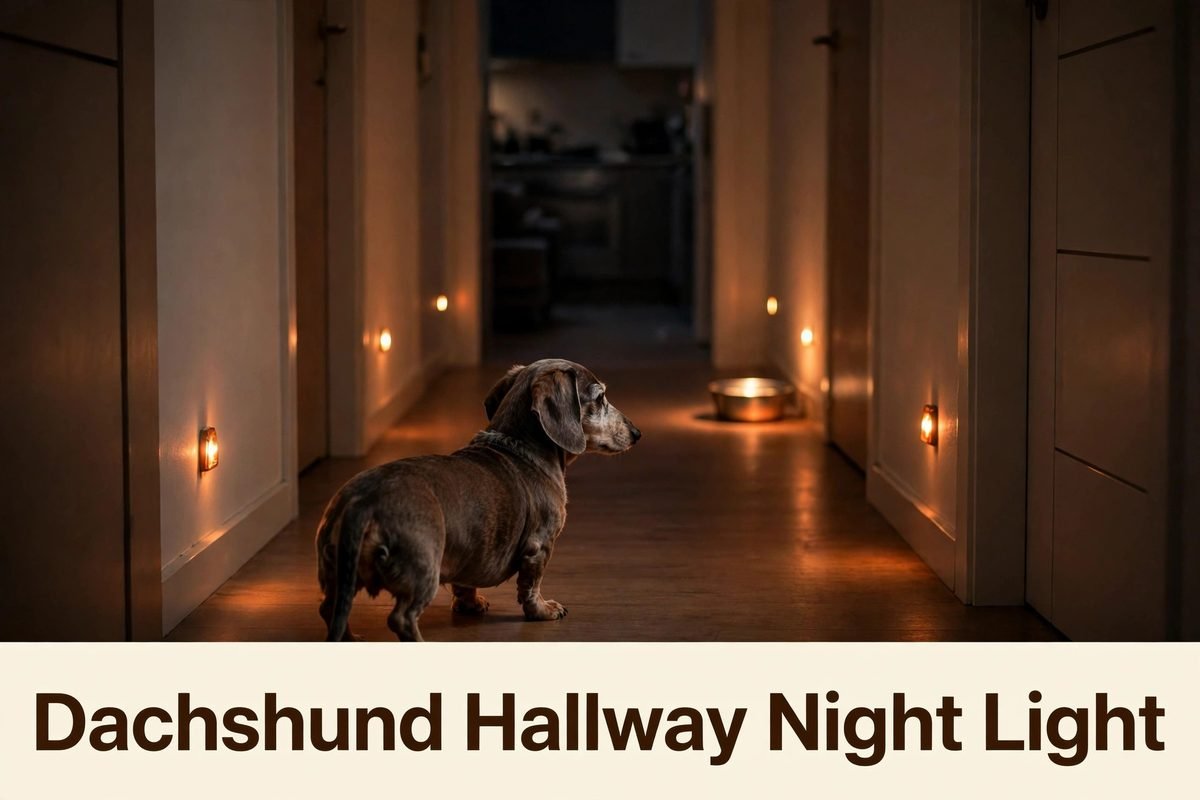
Dachshund Hallway Night Light for Senior Safety at Night
Quick Answer
- A Dachshund hallway night light is a small, low, warm light placed along the path from the bed to the water bowl and the door, so an older dog can see where it is going at night.
- Choose a warm, dim light at floor level, with a motion sensor or a dusk sensor, so it turns on when the dog moves and off when the dog settles.
- Place lights along the hallway, by the water bowl, and by the bed, so the whole path is lit without a bright light shining in the dog’s eyes.
- Keep the floor clear, use a ramp for the bed and the sofa, and keep the water bowl in the same place every night.
- Contact a veterinarian if the dog seems confused at night, bumps into walls, cannot find the door, or shows weakness in the back legs.
Contents
- 1. Why Senior Dachshunds Need Light at Night
- 2. Choosing a Hallway Night Light
- 3. Placing Lights Along the Night Path
- 4. A Calm Night Routine for a Senior Dog
- 5. When Light Alone Is Not Enough
- Hallway Night Light Checklist
- Common Mistakes
- When to Call Your Vet
- Pin This: Hallway Night Light Guide
- Frequently Asked Questions
- Conclusion
1. Why Senior Dachshunds Need Light at Night
A senior Dachshund sees less well at night than it did as a young dog. The eyes change with age, and a dark hallway that was easy to cross at three years old can be hard to cross at twelve. A dog that cannot see the edge of a rug, the leg of a chair, or the step down into a room may hesitate, bump into furniture, or refuse to move at all. A small light at floor level changes that: it shows the path, the water bowl, and the way back to bed, and the dog can move with confidence instead of fear.
Night light matters because a senior dog wakes at night. An older Dachshund may need water, a toilet break, or simply a change of position, and it may wake two or three times in a night. Each waking means a trip across the home in the dark, and each trip is a chance to slip, bump, or fall. A Dachshund has a long back and short legs, so a fall or a slip can hurt the back, and a dog that falls at night may lie still and wait for help. A Dachshund hallway night light does not stop the waking, but it makes each trip safer, and that safety is worth a small light.
Confusion at night is common in older dogs, and light helps there too. A dog that wakes in the dark may not know where it is, and it may pace, whine, or stand in a corner. A lit path gives the dog a landmark: the light by the bed, the light by the water bowl, and the light by the door. The senior confusion at night home routine covers the wider night routine, and light is one part of it. A calm, lit home at night helps a confused dog find its way, and it helps the owner sleep knowing the dog can move safely.
2. Choosing a Hallway Night Light
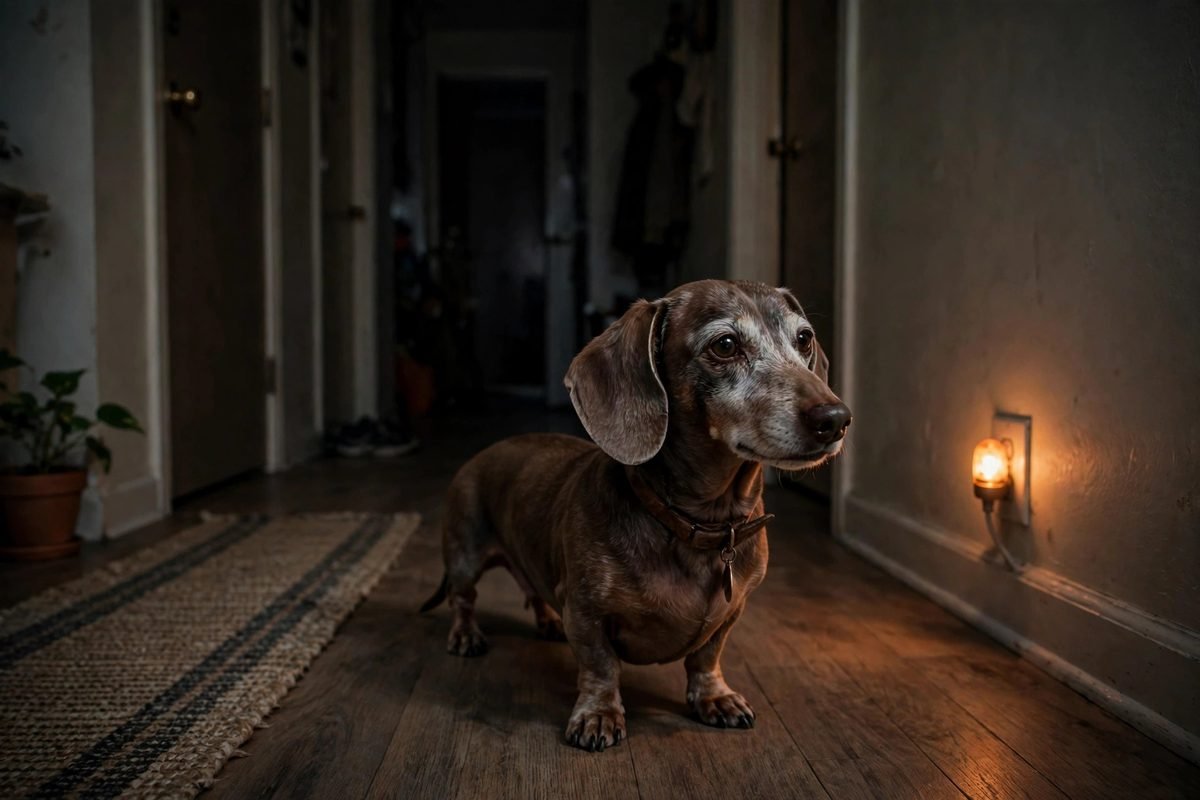
Choose a warm, dim light, not a bright white one. A warm light, in the amber or warm white range, is gentle on the eyes and does not wake the dog fully, while a bright white light can dazzle a dog and disturb sleep. The light should be dim enough that the room still feels like night, but bright enough that the floor, the rug edge, and the water bowl can be seen. A light with a dimmer or a low setting is useful, because the right brightness can be found by trial, and a light that is too bright can be turned down.
A motion sensor or a dusk sensor is the best choice for a hallway. A motion sensor turns the light on when the dog moves and off a minute later, so the light is there when needed and dark when not. A dusk sensor turns the light on at sunset and off at sunrise, so the path is lit all night without a switch. Avoid a light that must be switched on by hand, because a sleeping owner will not switch it on at three in the morning. A plug-in light with a sensor is simple, and a battery light with a sensor works where there is no socket.
Choose a light that is safe for a home with a dog. A plug-in light should sit flat against the wall, with no cord hanging down where a dog can chew it. A battery light should have a secure cover, so the battery cannot be reached. Avoid a light that gets hot to the touch, because a curious dog can burn its nose on a hot bulb. LED lights stay cool, use little power, and last a long time, which makes them the best choice for a night light that is on every night. Buy one light first, try it for a week, and only then buy more for the rest of the path.
3. Placing Lights Along the Night Path
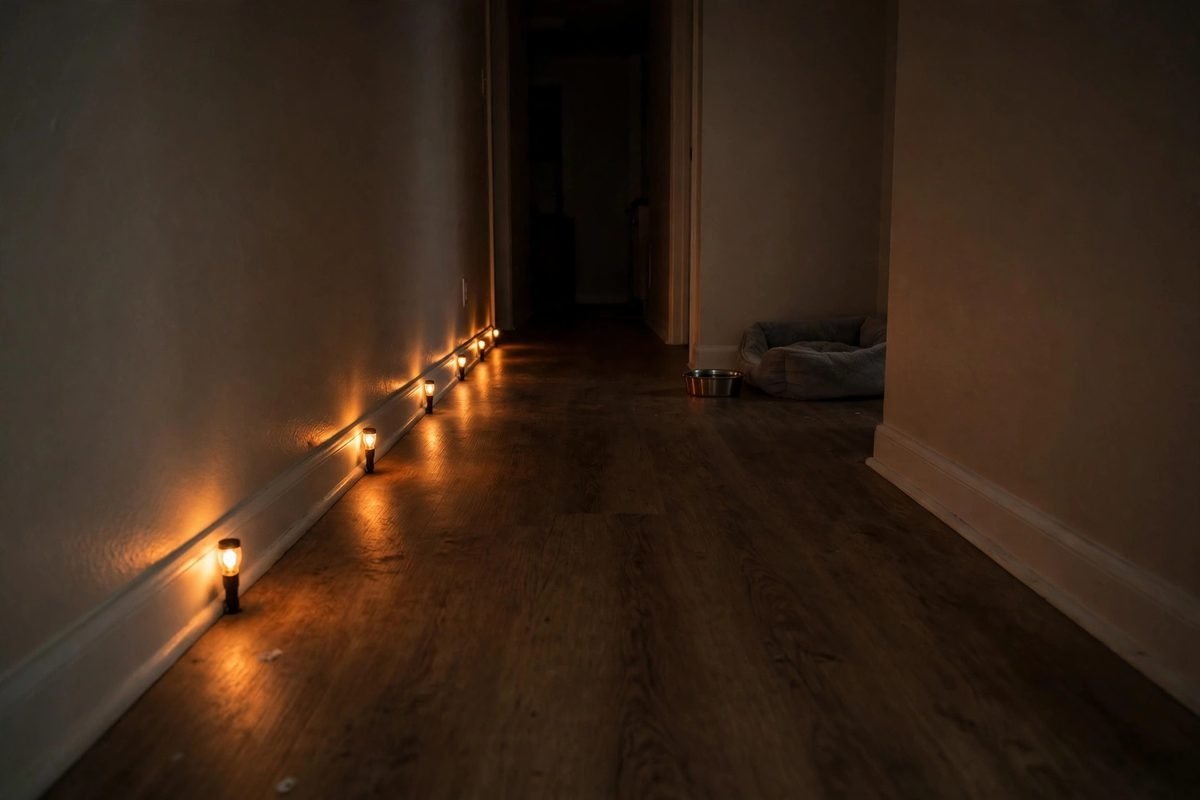
Light the path, not the room. Walk the dog’s night route in the dark, from the bed to the water bowl and to the door, and note where the dog hesitates. Those are the places that need light: the hallway corner, the step down into a room, the edge of a rug, and the spot by the water bowl. Place a light low on the wall, near the floor, at each of those points, so the light falls on the floor where the dog walks. A light high on the wall lights the ceiling, and a light at floor level lights the path.
Start with three lights: one by the bed, one in the middle of the hallway, and one by the water bowl. The light by the bed helps the dog see when it wakes, the light in the hallway shows the way, and the light by the water bowl shows the bowl itself. Add a light by the door if the dog goes out at night, and a light by the ramp if the dog uses a ramp to the bed or the sofa. Keep the lights the same colour and brightness, so the path feels steady and the dog is not dazzled by a change from dim to bright.
Check the lights from the dog’s height. Crouch down to the height of a Dachshund and look along the hallway: the path should be clear, the floor should be visible, and no light should shine straight into the eyes. Move a light if it shines into the dog’s face, and add a light if a stretch of floor stays dark. Keep the floor clear along the lit path: move shoes, bags, and cables out of the way, and use a rug with a non-slip base so the dog does not slip on a smooth floor in the dark. The LED collar light guide for night walks covers light for walks outside, and the hallway light covers the same job inside the home.
4. A Calm Night Routine for a Senior Dog
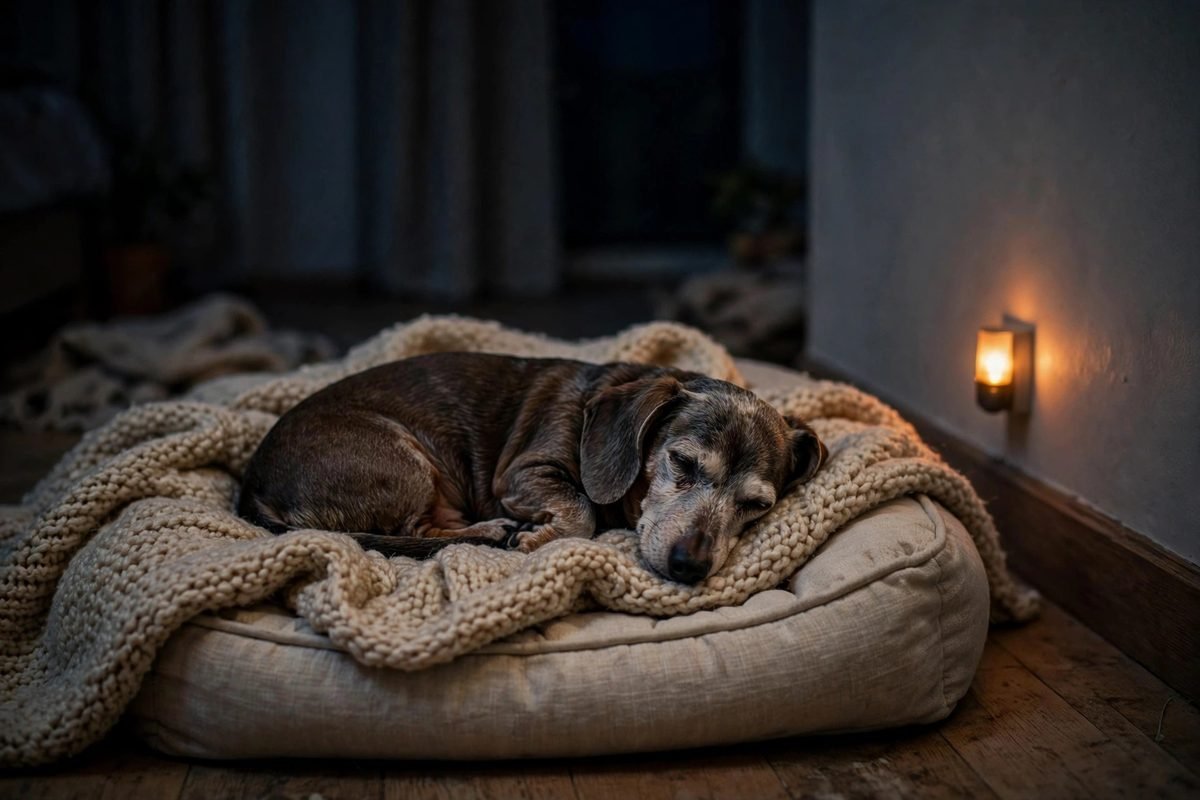
A night light works best inside a calm night routine. In the evening, take the dog for a short, slow walk, offer water, and let it settle on its bed. Keep the bed in the same place every night, on the floor, with a blanket to burrow under, and keep the water bowl in the same place too. A dog that knows where its bed and its bowl are does not need to search for them in the dark, and the lights only confirm what the dog already knows. A steady evening routine helps the dog sleep, and a dog that sleeps well wakes less often at night.
When the dog wakes at night, let it move at its own pace. The motion sensor lights will turn on as the dog moves, and the dog can walk to the water bowl, drink, and come back to bed. Do not switch on a bright overhead light, because it wakes the dog fully and makes it harder to settle again. Do not call the dog or pick it up unless it is stuck or in trouble, because a dog that is lifted in the dark may be startled. Sit quietly, let the dog finish its trip, and watch that it finds its way back to bed.
In the morning, check the night. Note whether the dog woke, how many times, and whether it found its way easily. A dog that wakes more often, that paces, or that cannot find the door may need a change in the routine or a call to a veterinarian. Keep a short note by the bed, with the time and what happened, because a pattern over a week is easier to see than a single night. A calm night routine, a lit path, and a short note together give a senior dog the safest nights possible at home.
5. When Light Alone Is Not Enough
Light helps a senior dog see, but it cannot fix the reasons a dog wakes at night. A dog that wakes often may need a toilet break, may be in pain, or may be confused, and light alone will not solve those problems. A dog that pants, whines, or paces at night may be uncomfortable, and the bed, the room temperature, or the water bowl may need a change. A dog that drinks far more water at night than before may have a health problem, and a veterinarian should be asked about it.
A back problem can hide behind a night problem. A senior Dachshund that hesitates to move at night, that will not jump onto the bed, or that yelps when lifted may have a sore back, not just poor eyesight. Disc degeneration in short-legged breeds can begin in the first year of life, and a lifetime of load on the spine means a senior dog deserves care for its back as well as its eyes. If the dog shows weakness in the back legs, refuses to move, or cries when touched, contact a veterinarian, because the problem may be the back, and light will not fix it.
Eyesight and hearing change with age, and light is only one part of the answer. A dog that cannot hear well may need a touch or a gentle vibration to wake it, and a dog that cannot see well may need a scent marker by the door and the bowl. Keep the home layout the same, so the dog can learn the path by memory as well as by sight. A lit path, a steady layout, and a calm routine together help a senior dog move safely at night, and each part matters as much as the others.
Hallway Night Light Checklist
| Step | What to Do | Where |
|---|---|---|
| Choose | Warm, dim LED; motion or dusk sensor; stays cool | Before buying |
| Place | Low on the wall, near the floor, along the path | Bed, hallway, water bowl |
| Check | Look from the dog’s height; no light in the eyes | After fitting |
| Clear | Move shoes, bags, and cables off the path | Every evening |
| Routine | Same bed, same bowl, short evening walk | Every night |
| Note | Write down night wakings and how the dog moved | Every morning |
Common Mistakes
- Using a bright white light that dazzles the dog and disturbs sleep.
- Placing lights high on the wall, so the ceiling is lit and the floor stays dark.
- Lighting one room and leaving the hallway dark, so the path breaks in the middle.
- Moving the bed or the water bowl, so the dog must search for them in the dark.
- Leaving shoes, bags, and cables on the lit path, so the dog trips.
- Switching on a bright overhead light when the dog wakes at night.
- Treating light as a fix for pain, confusion, or a back problem.
When to Call Your Vet
Contact a veterinarian if the dog seems confused at night, bumps into walls, cannot find the door or the water bowl, drinks far more water at night, or shows weakness in the back legs. Contact a veterinarian urgently if the dog cannot move its back legs, loses bladder control, or is in severe pain. A veterinarian can check the eyes, the back, and the general health together, and can advise whether the night routine or the care plan needs to change. This article gives general information only and is not a diagnosis.
Pin This: Hallway Night Light Guide
- Choose a warm, dim LED light with a motion or dusk sensor.
- Place lights low on the wall, by the bed, the hallway, and the water bowl.
- Check the path from the dog’s height; no light in the eyes.
- Keep the floor clear and the bed and bowl in the same place.
- Keep a short note of night wakings each morning.
- Call a veterinarian if the dog is confused or cannot find its way.
Frequently Asked Questions
How many night lights does a hallway need?
Three lights are a good start: one by the bed, one in the middle of the hallway, and one by the water bowl. Add a light by the door or the ramp if the dog uses them at night.
Should a night light be warm or white?
Warm is better. A warm, dim light is gentle on the eyes and does not wake the dog fully, while a bright white light can dazzle a dog and disturb sleep.
Is a motion sensor light better than a dusk sensor light?
Both work well. A motion sensor turns on only when the dog moves, and a dusk sensor stays on all night. Choose the one that fits the hallway and the sockets available.
Can a night light help a confused senior dog?
Yes, a lit path gives a confused dog landmarks: the light by the bed, the light by the water bowl, and the light by the door. Light helps, but a steady layout and a calm routine matter too.
When should a vet be called about night problems?
Call if the dog is confused, bumps into walls, cannot find the door or the bowl, or drinks far more water at night. Call urgently if the dog cannot move its back legs or is in severe pain.
Conclusion
A Dachshund hallway night light is a small, warm glow that makes a senior dog’s night trips safer. Light the path, keep the floor clear, keep the bed and bowl in the same place, and the next step is to walk the night route tonight and see where the dark spots are.