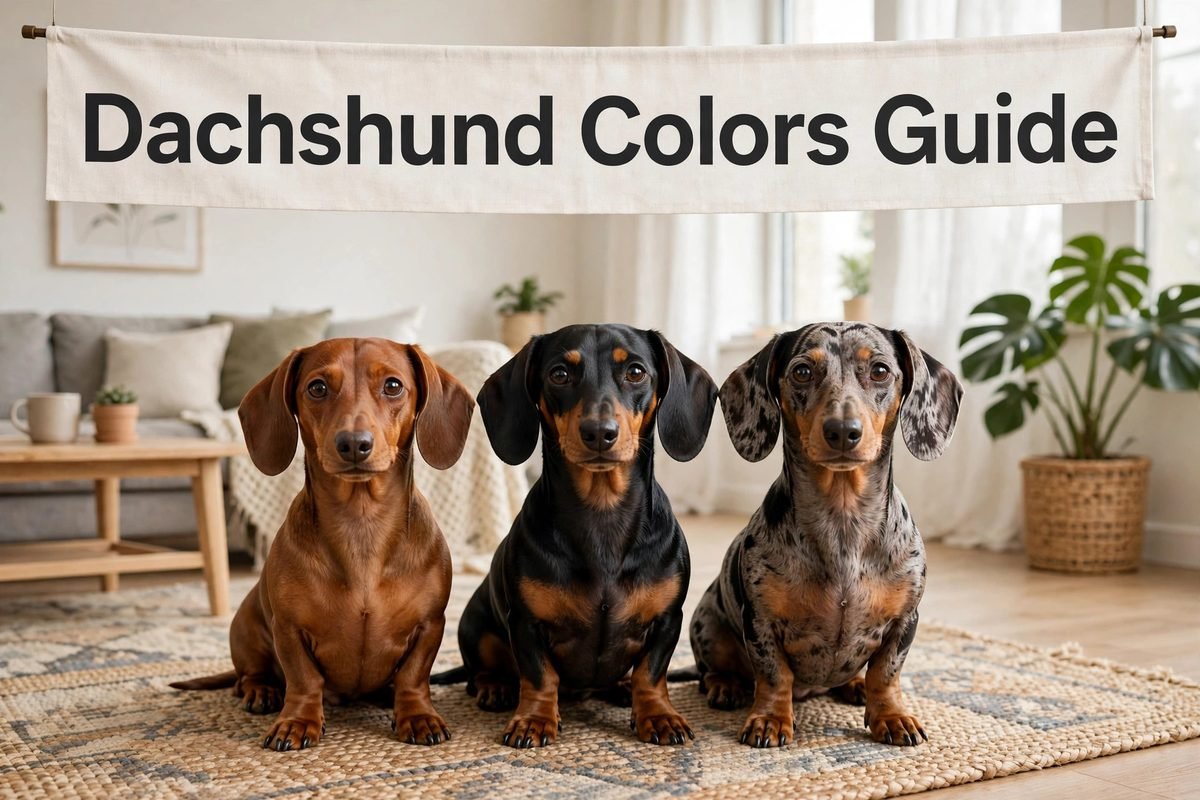
Dachshund Colors: A Complete Guide to Coats and Care
Quick Answer
- Dachshund colors include solid red, cream, black and tan, chocolate and tan, blue and tan, and fawn, plus patterns such as dapple, brindle, piebald, and sable.
- Coat types are smooth, longhaired, and wirehaired, and each type needs a different brushing routine.
- Color does not decide temperament or health on its own, so choose a Dachshund for its health, movement, and fit with the home.
- Brush regularly, check the skin under the coat, and keep baths gentle and short.
- Contact a veterinarian if coat color or skin changes suddenly, with itching, sores, or hair loss.
Contents
- 1. Solid Dachshund Colors: Red, Cream, and Black and Tan
- 2. Dilute and Less Common Colors: Chocolate, Blue, and Fawn
- 3. Patterns That Change the Look: Dapple, Brindle, and Piebald
- 4. Coat Types: Smooth, Longhaired, and Wirehaired
- 5. Coat Care at Home: Brushing, Bathing, and Skin Checks
- Dachshund Colors and Coats at a Glance
- Common Mistakes
- When to Call Your Vet
- Pin This: Dachshund Colors Guide
- Frequently Asked Questions
- Conclusion
1. Solid Dachshund Colors: Red, Cream, and Black and Tan
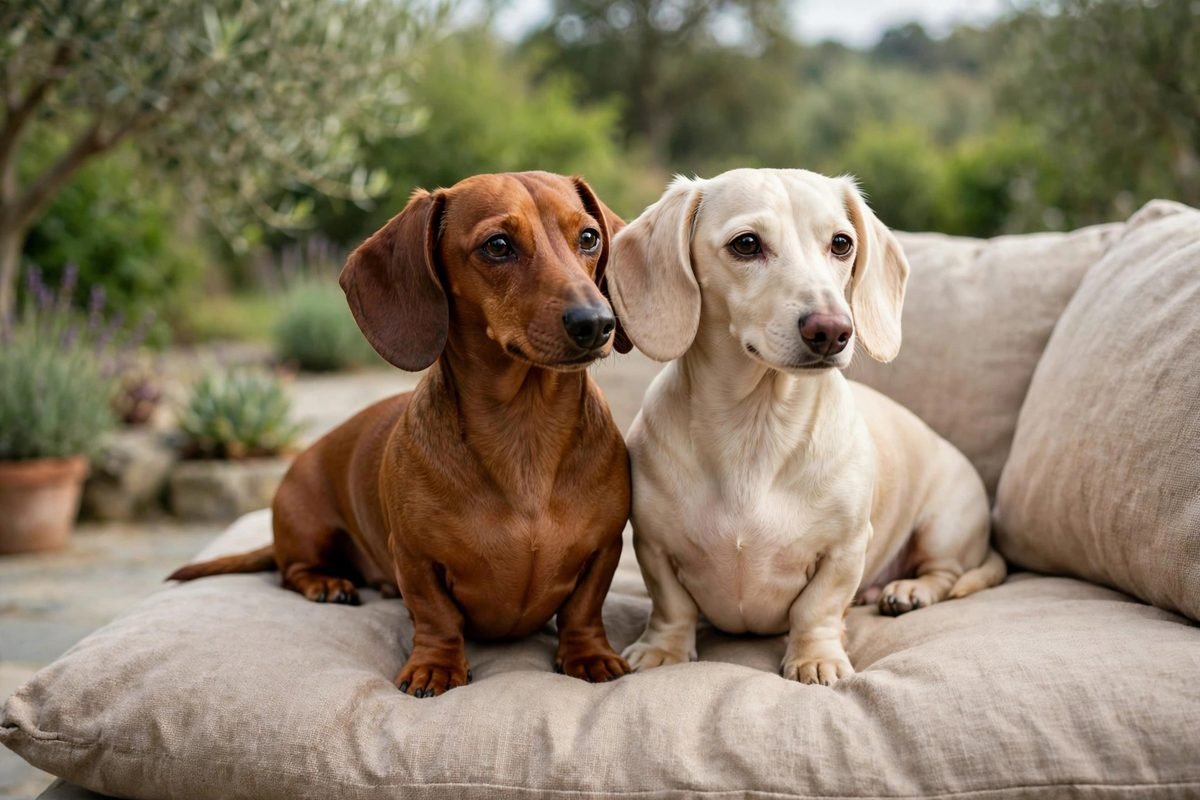
Dachshund colors start with the solid shades, and red is the best known of them all. A red Dachshund can range from a deep rusty red to a lighter golden red, and the shade often changes slightly as the puppy grows. Some red coats look almost copper in sunlight, while others look softer indoors. The nose and nails usually match the coat tone. Red is a single-color coat, with no second color on the chest or legs.
Cream is the palest solid color, ranging from a soft pale gold to a light, almost white shade. A cream Dachshund looks gentle and light, and the coat often shows shading on the ears and back. Cream coats can be harder to keep clean after muddy walks, because light fur shows dirt more clearly than dark fur. A quick wipe with a damp cloth after a walk usually keeps a cream coat looking fresh.
Black and tan is the classic two-color Dachshund look, with a black body and tan points on the muzzle, eyebrows, chest, legs, and under the tail. The tan points should be clear and warm, not washed out, and the line between black and tan is usually neat. This color shows up in all three coat types. The contrast between the dark body and the tan points makes the long shape of the dog easy to see.
Solid colors still vary from dog to dog. Two red Dachshunds can differ in shade, and two black and tan Dachshunds can differ in how wide the tan points are. Lighting matters too: a coat that looks dark brown indoors can look rich red in sunlight. When choosing a Dachshund, look at the whole dog — movement, weight, and comfort — rather than shade alone. Color is a pleasant part of the breed, not a measure of health or character.
2. Dilute and Less Common Colors: Chocolate, Blue, and Fawn
Chocolate and tan is a warm brown version of the black and tan pattern, with a rich brown body and tan points in the same places: muzzle, eyebrows, chest, legs, and under the tail. The brown can range from a deep milk chocolate to a lighter cocoa shade, and the nose is usually brown rather than black. Like black and tan, this color appears in smooth, longhaired, and wirehaired coats.
Blue and tan is a dilute color, where the black of a black and tan coat is softened to a grey-blue shade. The effect is a smoky grey body with tan points, and the nose is usually grey. Blue coats can look different in different light, sometimes more grey, sometimes more blue-grey. A blue Dachshund needs the same care as any other color, with regular brushing and skin checks.
Fawn, sometimes called Isabella, is the dilute form of chocolate, with a soft, pale brown-grey body and tan points. It is one of the palest two-color coats, and it can look almost silvery in bright light. Fawn coats show dirt more easily than darker coats, and they can fade a little in strong sun over time. Owners of fawn Dachshunds often notice that the coat looks different in summer and winter, as the light and the thickness of the coat change with the seasons.
Less common colors attract attention, and that can lead to higher prices or longer waits, yet color alone is never a reason to choose a dog. Health, movement, weight, and temperament matter far more than a rare shade. Ask about the parents, the vet checks, and the way the puppy moves and rests, and let color be the last detail, not the first.
3. Patterns That Change the Look: Dapple, Brindle, and Piebald
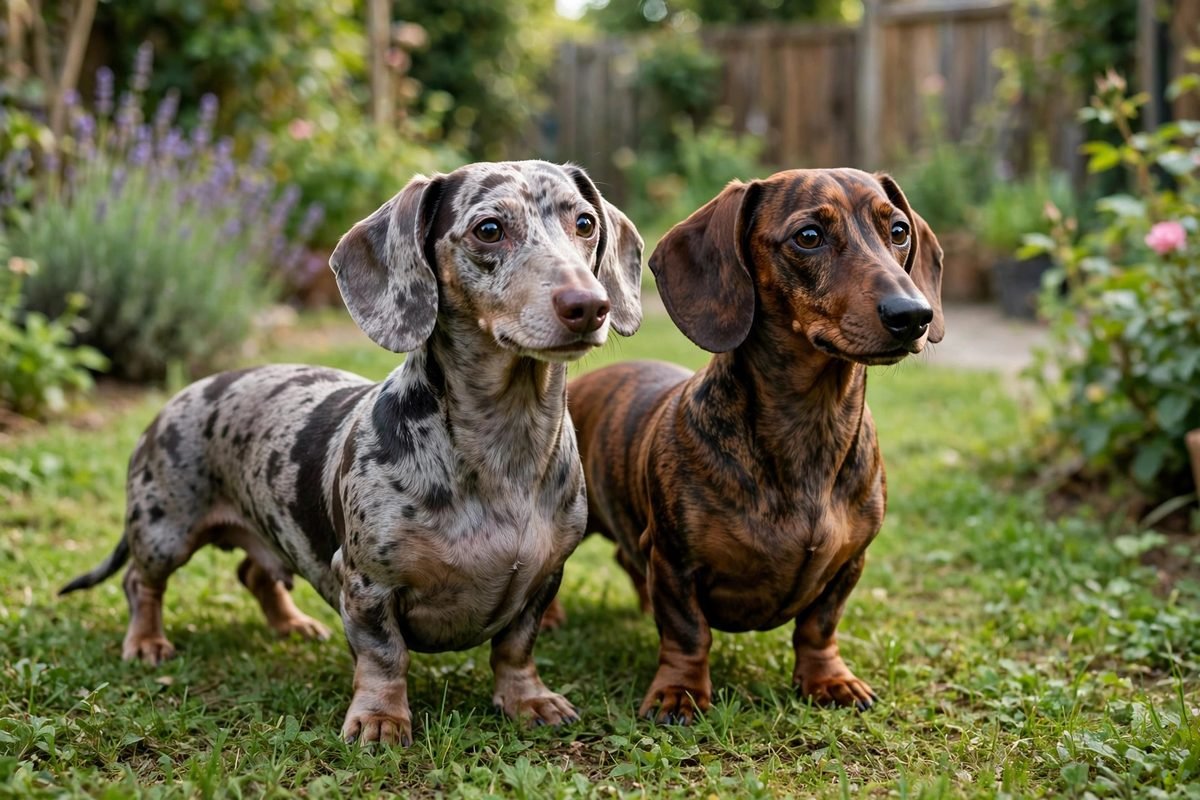
Dapple is the most striking Dachshund pattern, with lighter patches scattered over a darker base coat. A black and tan dapple has silver-grey patches on the black areas, while a red dapple has lighter red or cream patches on a red base. No two dapple coats look the same, because the patches fall in different places on every dog. The pattern often becomes clearer as the puppy grows.
Brindle is a striped pattern, with darker stripes over a lighter base color. A red brindle has dark stripes across a red coat, and a chocolate brindle has dark stripes across a brown coat. The stripes can be fine and close together, or wider and more spaced out, and they often show most clearly on the body and legs. Brindle is less common than solid colors, and it gives the coat a tiger-like look that many owners love. Brushing a brindle coat shows the stripes clearly once the loose hair is removed.
Piebald is a white pattern, with large white patches over a base color such as red, black and tan, or chocolate and tan. A piebald Dachshund may be mostly white with colored patches on the head, back, and tail, or mostly colored with white on the chest, legs, and muzzle. The white areas show mud and dirt more clearly than darker fur, so piebald coats need extra care for the white areas after wet walks.
Sable is a softer pattern, where each hair has a darker tip over a lighter base, giving the coat a shaded, almost dusty look. A red sable has dark-tipped hairs over red, and the ears and back often look darker than the rest of the body. Over time, the darker tips may fade, and the coat can look lighter as the dog ages. Patterns add variety, yet they do not change the daily care a Dachshund needs.
4. Coat Types: Smooth, Longhaired, and Wirehaired
The smooth coat is short, close, and shiny, lying flat against the body. It is the easiest coat to care for, needing only a short brush once or twice a week and a wipe after muddy walks. A smooth coat shows the color and pattern clearly, because there is no long hair to hide the markings. Smooth Dachshunds shed a little all year, and a rubber grooming mitt or a soft bristle brush removes loose hair in a few minutes. In cold weather, a smooth coat offers less warmth, so a jumper on winter walks helps.
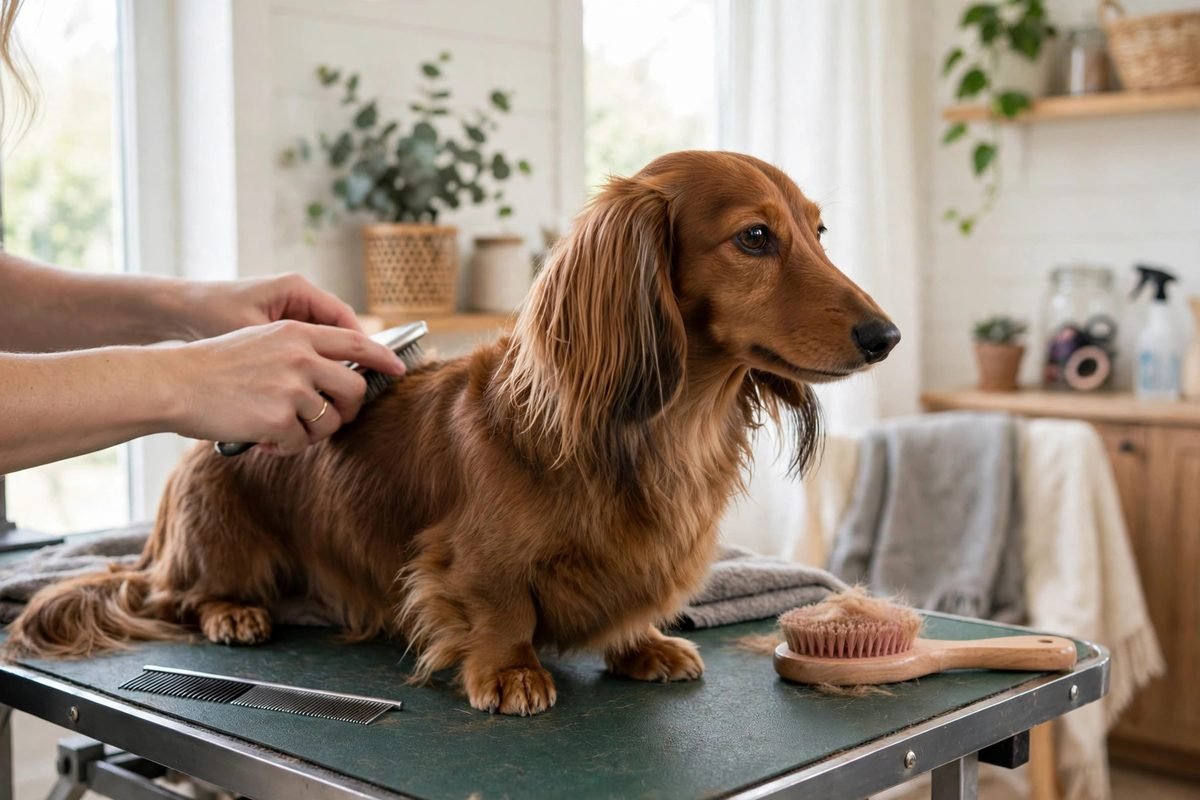
The longhaired coat is soft, silky, and longer on the ears, chest, belly, legs, and tail, with feathering that moves as the dog walks. It looks elegant, and it shows color with a softer edge than a smooth coat. Longhaired coats need brushing two or three times a week to stop tangles, especially behind the ears and under the legs, where mats form first. A wide-toothed comb works well after a brush. Long hair picks up mud and leaves, so a quick check after walks saves a longer grooming session later.
The wirehaired coat is rough, thick, and wiry, with a beard and eyebrows that give the dog a different face from the other coat types. It feels coarse to the touch, and it holds its shape even after a walk in the rain. Wirehaired coats need brushing once or twice a week, and many owners have the coat hand-stripped or clipped by a groomer a few times a year to keep the texture. A wire coat sheds less visibly than a smooth coat, yet loose hair still collects in the brush and needs removing.
Coat type changes how a color looks and how much grooming the dog needs. A red smooth coat looks bold and bright, a red longhaired coat looks soft and flowing, and a red wirehaired coat looks rough and warm in tone. Grooming time is part of daily life: a smooth coat takes minutes a week, while a longhaired coat takes longer and needs a regular routine. The coat and skin care guide at home covers the brushing tools and steps for each coat type.
5. Coat Care at Home: Brushing, Bathing, and Skin Checks
Brushing is the core of coat care, and it works best as a short, calm routine. Brush on a flat surface or on the lap, with the dog settled and relaxed, and work in the direction the hair grows. Start with the body, then the legs, ears, and tail, and finish with a check under the legs and behind the ears, where tangles hide. Keep sessions short, especially for puppies, and end with a calm word and a small treat.
Bathing should stay gentle and infrequent. Most Dachshunds need a bath only when the coat is dirty or smells, not on a fixed weekly schedule. Use lukewarm water and a mild dog shampoo, and rinse well, because shampoo left in the coat can dry the skin. Dry the dog with a towel, and keep it warm until the coat is dry. A bath is also a good time to check the skin for redness, flakes, sores, or new lumps.
Skin checks matter because the skin sits under the coat, and color can hide changes. Part the hair gently and look at the skin along the back, belly, and legs. Healthy skin is clean, without redness, flakes, or sores, and the coat should feel smooth, not greasy or dry. Shedding changes with the seasons, and a heavier shed in spring and autumn is normal. The seasonal shedding routine at home explains how to handle the heavier shed.
Coat care is also back care, because grooming happens with the dog on a surface, and lifting matters. Lift the dog level, with one hand under the chest and one under the hips, and set it down level on a non-slip surface. Never lift a Dachshund by its front legs or let it jump down from a high grooming table. A calm, regular coat routine keeps the coat healthy, the skin checked, and the back safe at the same time.
Dachshund Colors and Coats at a Glance
| Color or Pattern | Look | Coat Care Note |
|---|---|---|
| Red | Solid deep to golden red | Easy care; shows dirt little |
| Cream | Pale gold to near white | Shows mud; wipe after walks |
| Black and tan | Black body, tan points | Classic look in all coat types |
| Chocolate and tan | Warm brown body, tan points | Brown nose; same care as black and tan |
| Blue and tan | Smoky grey-blue body, tan points | Check skin often; dilute coat |
| Fawn | Pale brown-grey body, tan points | Shows dirt; shade shifts with light |
| Dapple | Light patches on darker base | No two coats alike |
| Brindle | Dark stripes over lighter base | Stripes show after brushing |
| Piebald | Large white patches over color | White areas need extra cleaning |
| Sable | Dark-tipped hairs over lighter base | Shading may fade with age |
Common Mistakes
- Choosing a Dachshund by color alone, without checking health, movement, and vet history.
- Paying more for a rare color from a breeder that puts shade above health.
- Brushing only the top of the coat and missing tangles behind the ears and under the legs.
- Bathing too often with strong shampoo, drying out the skin.
- Using a brush that is too harsh for a smooth coat or too fine for a wire coat.
- Ignoring a sudden change in coat color, thickness, or skin condition.
- Lifting the dog by its front legs onto a grooming table instead of lifting level.
When to Call Your Vet
Contact a veterinarian if the coat thins suddenly, bald patches appear, the skin becomes red, sore, or flaky, or the dog itches, scratches, or licks one spot often. Contact a veterinarian urgently if the skin has open sores, swelling, or a bad smell, or if coat change comes with weakness, back pain, or a loss of appetite. A veterinarian can check the skin, coat, and spine, and explain the next steps. The Animal Medical Center guide to intervertebral disc disease in dogs explains the back signs that need prompt attention, and the Cornell guide to chondrodystrophy and intervertebral disc disease explains the breed background behind that caution. This article gives general information only and is not a diagnosis.
Pin This: Dachshund Colors Guide
- Dachshund colors range from red and cream to black and tan, chocolate, blue, and fawn.
- Patterns include dapple, brindle, piebald, and sable, and no two patterned coats look the same.
- Coat types are smooth, longhaired, and wirehaired, each with its own brushing routine.
- Brush regularly, check the skin under the coat, and bathe gently only when needed.
- Lift level for grooming, and call a veterinarian if the coat or skin changes suddenly.
Frequently Asked Questions
What are the most common dachshund colors?
Red, black and tan, and chocolate and tan are among the most common dachshund colors. Cream, blue and tan, and fawn are less common, and patterns such as dapple and brindle add further variety.
Do dachshund colors change as a puppy grows?
Yes, shades often change a little as a puppy grows. Red can deepen or lighten, dapple patches can become clearer, and sable shading can fade over time.
Does coat color affect a Dachshund’s temperament?
No, color does not decide temperament on its own. Temperament comes from breeding, early handling, training, and daily life, not from the shade of the coat.
Which Dachshund coat type needs the most grooming?
The longhaired coat needs the most regular grooming, with brushing two or three times a week to stop tangles behind the ears and under the legs. Smooth coats need the least, and wirehaired coats sit in between.
When should a coat change be checked by a vet?
Call a veterinarian if the coat thins suddenly, bald patches appear, or the skin becomes red, sore, or flaky. Bring notes on when the change started and what has changed in food or routine.
Conclusion
Dachshund colors bring variety to the breed, from solid red to dapple, brindle, and piebald, in smooth, longhaired, and wirehaired coats. Learn the color, care for the coat, and let health and comfort lead every choice.