
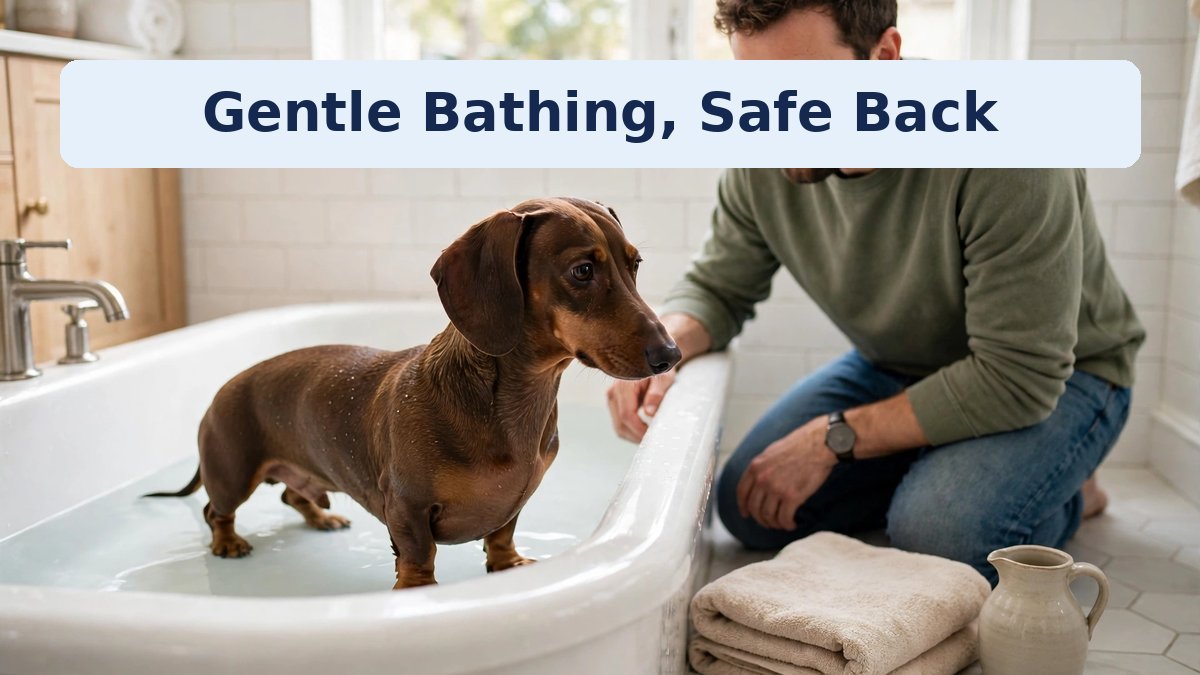
Dachshund Bathing Without Back Strain: A Gentle Routine
Quick Answer
- Use a low, non-slip tub or shower base, and lift with both hands: one under the chest, one supporting the hindquarters, keeping the back level.
- Keep your dog standing on all fours while washing, work in short calm stages, and never dangle, twist, or hold a Dachshund by the front legs alone.
- Dry gently with towels, keep the dog warm and on the floor afterwards, and ask a veterinarian about any pain, stiffness, or reluctance to move after bathing.
Contents: 1. Why Bath Time Needs a Back Plan | 2. Set Up Before the Dog Gets Wet | 3. Lift In and Out Safely | 4. Wash in Calm Stages | 5. Dry, Brush, and Settle | Step-by-Step Bath | Common Mistakes | When to Call Your Vet | FAQs | Pin This
Bath time is one of the few moments when even a careful owner can accidentally strain a Dachshund’s back. A wet dog wriggles, a slippery tub invites scrambling, and lifting a wet dog by the middle or by one end puts uneven pressure on the spine. The good news is that bathing can be made much safer with a little preparation: a low tub, a non-slip surface, everything within reach, and a calm, staged routine that keeps your dog standing level throughout.
This guide covers that routine from setup to drying. It is about handling and routine, not about choosing products, and it does not claim that any bathing method prevents back problems. If your dog is already in pain, reluctant to move, or recovering from a veterinary procedure, ask your veterinarian before bathing at all, and follow their advice on timing and handling.
1. Why Bath Time Needs a Back Plan
A Dachshund’s long back and short legs make scrambling, twisting, and sudden jumps more of a concern than they are for many other breeds. In a bath, those movements often happen at once: the dog tries to climb out, slips, twists to escape the water, and is caught mid-movement by a well-meaning owner. Planning the bath removes most of those moments. A non-slip mat stops scrambling, a low tub removes the need to climb, and a second person, when available, can steady the dog while the other washes.
Background information helps explain the caution. The Animal Medical Center explains intervertebral disc disease in dogs and how disc problems can affect movement. Cornell describes chondrodystrophy and intervertebral disc disease in breeds such as the Dachshund. These sources describe general background, not bathing advice, and they do not say bathing causes disc disease. The practical point stands on its own: calm, level handling during a bath is sensible back care.
2. Set Up Before the Dog Gets Wet
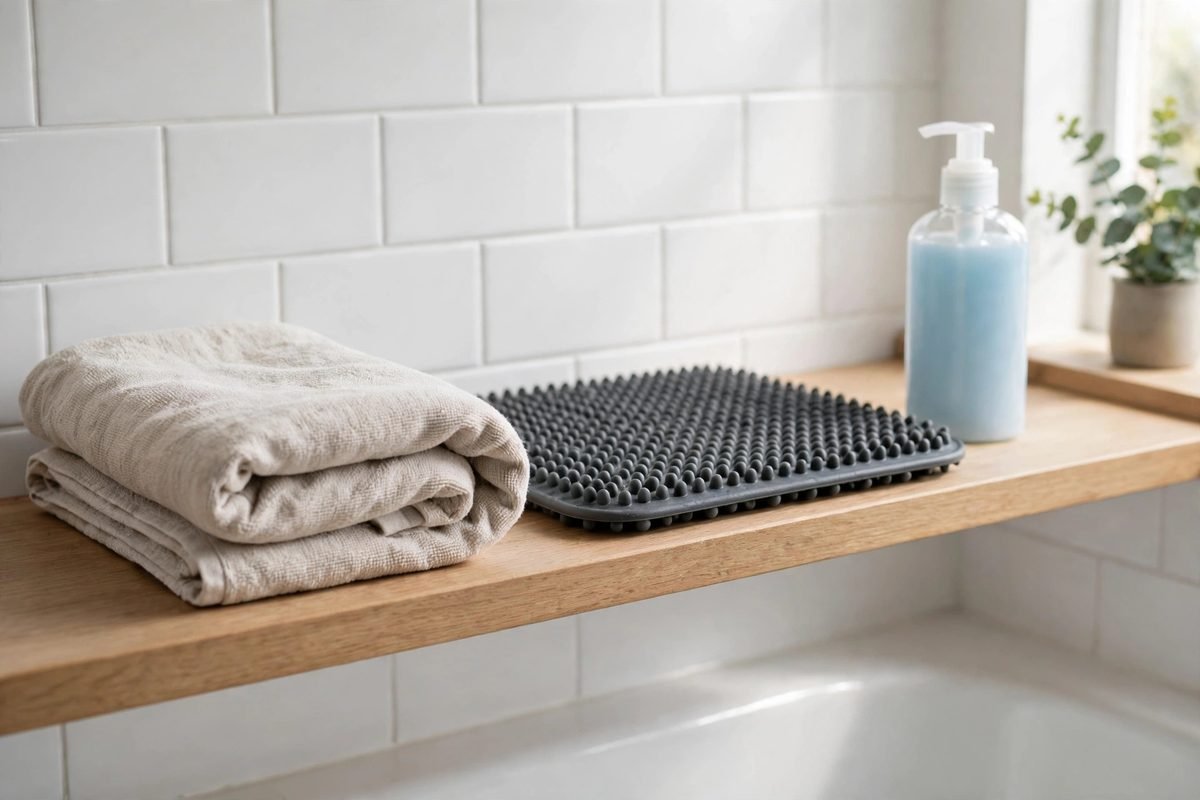
Set up everything before your dog enters the bathroom, because leaving a wet dog alone to fetch a towel is when accidents happen. You need a non-slip mat in the tub or shower, towels within arm’s reach, a jug or handheld shower, and a brush for afterwards. Lay a towel on the floor beside the tub for the first drying stage, and close the bathroom door so a wet dog cannot dash onto slippery hallway floors. Keep the room warm, and run the water to a lukewarm temperature before the dog gets in, testing it on the inside of your wrist.
Choose the lowest safe bathing place you have. A walk-in shower base is often easier than a high-sided tub, because the dog steps in with help rather than being lifted over a high edge. If you must use a tub, a sturdy step or low platform beside it can help you lift safely without stretching. Remove anything your dog could climb on or knock over, and keep shampoo and other items out of reach of paws. A calm setup takes five minutes and removes most of the rushing that leads to awkward lifts.
3. Lift In and Out Safely
Lifting is the highest-risk moment of the bath, so give it your full attention. Stand close to the tub, bend your knees rather than your back, and lift with both hands: one hand under the chest, just behind the front legs, and the other hand under the hindquarters, supporting the back end. Keep the dog’s back level as you lift, move in one smooth motion, and set all four paws down on the non-slip mat before letting go. The guide on how to lift a Dachshund correctly describes this two-hand method in detail.
Do the same in reverse when the bath is done. Lift the dog out while it is still on the mat, keeping the back level, and set it down directly onto the floor towel. Do not let a wet dog jump out of the tub, even from a low height, because wet paws slip and landings are uncontrolled. If your dog is large for you to lift comfortably, or wriggles strongly, ask another adult to help: one person lifts while the other steadies and guides. If you cannot lift safely, a walk-in shower where the dog can step in with guidance is a better choice than a high tub.

4. Wash in Calm Stages
Keep your dog standing on all fours throughout the wash, and work in short stages with pauses. Wet the coat gradually, starting at the body and avoiding a sudden stream over the head. Wash the body with slow, gentle strokes, keeping one hand resting lightly on the dog when you can, so it feels steadied rather than held down. Avoid pulling a leg out to wash a paw; instead, lift each paw briefly, wash it, and set it back down, keeping the dog’s weight supported. Rinse thoroughly, since leftover shampoo can irritate skin and lead to scratching and restlessness later.
Talk calmly throughout, and pause if your dog trembles, tries repeatedly to climb out, or freezes. A short break with a towel draped over the dog is better than pushing through distress, because a frightened dog is more likely to twist or leap. Keep the whole wash as short as the coat allows, and skip non-essential steps on a difficult day. A slightly shorter bath with calm handling is better than a long bath that ends in a scramble. Do not combine bath time with other handling tasks, such as nail care, unless your dog is fully calm and you have time to do each task separately.
5. Dry, Brush, and Settle
Dry with towels before your dog moves anywhere. Wrap a towel around the body and press gently to absorb water, rather than rubbing vigorously, which can tangle longer coats and excite a wet dog. Use a second dry towel if needed, and keep your dog on the floor towel until the worst of the water is off. Avoid letting a wet dog run, jump onto furniture, or use stairs until it is mostly dry and moving normally, because wet paws on smooth floors are a slipping risk.
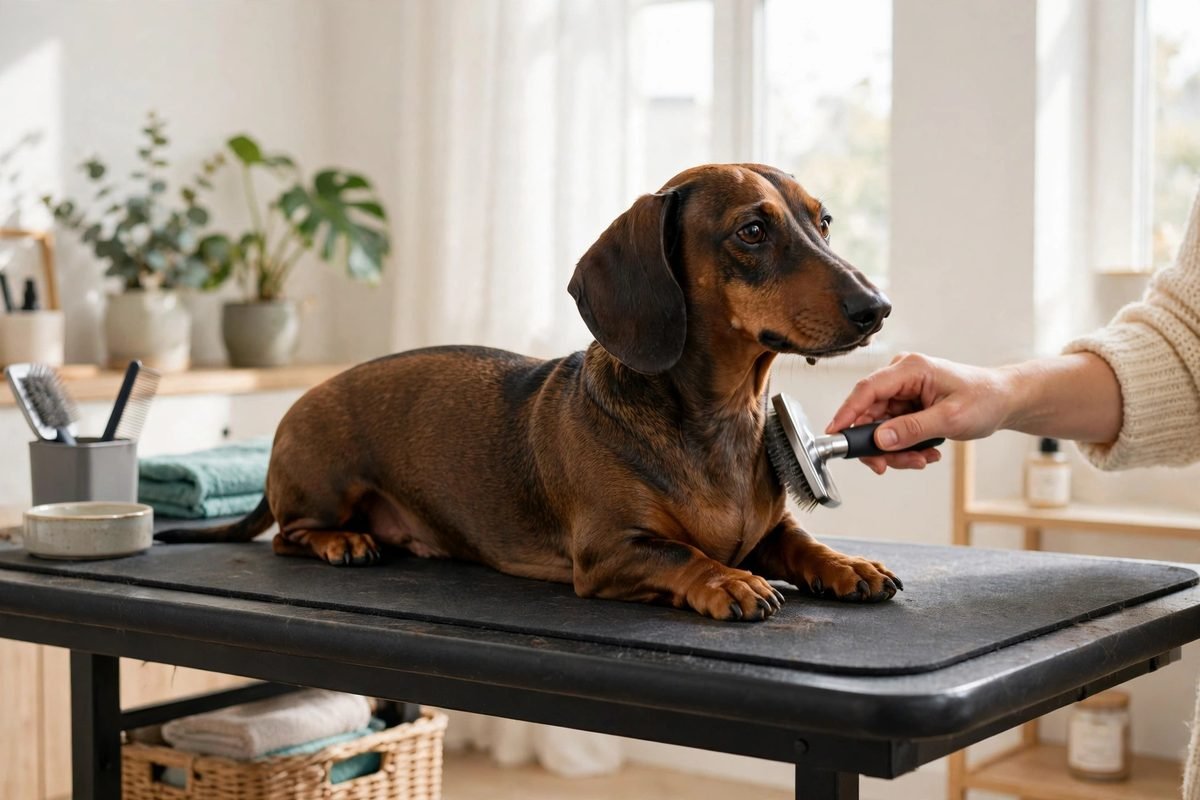
Once mostly dry, brush gently with a suitable brush, working in the direction of the coat and stopping if you meet a tangle. Brushing is a good moment to notice changes in the coat or skin, and to give calm praise for a settled bath. Finish with a rest period on a familiar floor bed, with water available and the room warm. Gentle handling after a bath, similar in spirit to the calm touch described in the guide to gentle back massage for Dachshunds, helps a dog settle, but stop immediately if your dog flinches, moves away, or shows discomfort, and note it for your veterinarian if it persists.
Bath Setup Checklist
| Stage | Ready before you start |
|---|---|
| Place | Low tub or shower base, non-slip mat, door closed |
| Water | Lukewarm, tested on your wrist |
| Within reach | Towels, jug or shower head, brush |
| Floor | Dry towel beside the tub, hallway clear |
| Help | Second adult if lifting or wriggling is a concern |
Step-by-Step: A Calm Bath
- Set up the room, mat, towels, and lukewarm water before the dog enters.
- Lift in with both hands, back level, and set all four paws on the mat.
- Wet the coat gradually, keeping the dog standing on all fours.
- Wash in short stages, lifting each paw briefly rather than pulling a leg.
- Rinse thoroughly, pausing if the dog becomes distressed.
- Lift out with both hands onto the floor towel, then towel-dry gently.
- Brush calmly, then allow a warm rest on a floor bed.
Common Mistakes
The most common mistake is lifting a wet dog with one hand under the belly, which lets the back sag and the dog wriggle. Always use two hands, chest and hindquarters. A second mistake is leaving the dog alone in the tub while fetching a towel, which invites climbing and slipping. A third mistake is rushing the rinse or the drying, leaving a wet dog to run onto slippery floors. A fourth mistake is bathing a dog that is already showing signs of pain or stiffness without veterinary advice, turning a routine bath into an unnecessary risk.
When to Call Your Vet
Contact a veterinarian if your dog yelps during lifting or washing, refuses to move after a bath, walks stiffly, holds its head low, or shows a change in appetite, toileting, or behaviour after bathing. A veterinarian can examine your dog and advise whether the bath, an underlying problem, or something else is involved. Seek veterinary care promptly for sudden weakness, severe pain, or an inability to stand or walk, and mention the bath, the lifting, and any fall or slip when you call. Do not attempt to diagnose the cause at home, and do not repeat a bath to “test” whether the reaction happens again.
How often should I bathe my Dachshund?
Only as often as the coat and lifestyle require, often every few weeks rather than weekly, unless your veterinarian advises otherwise. Over-bathing can dry the skin, so a routine based on need is better than a fixed weekly schedule.
What if a Dachshund hates baths?
Shorten the bath, keep handling calm, and build up gradually with treats and praise for calm standing. If distress is severe, ask a veterinarian or a qualified groomer about alternatives, rather than forcing a long bath.
Is a shower better than a tub?
A walk-in shower base is often easier for back-safe handling, because lifting height is lower. The best choice is the lowest, least slippery option your dog can enter with calm guidance.
Can I wash a Dachshund in the garden?
Outdoor washing adds slipping, temperature, and escape risks, and makes calm lifting harder. An indoor, warm, non-slip space is generally safer and easier to control.
What if a Dachshund slips in the tub?
Stay calm, steady the dog without grabbing a single leg, and end the bath if needed. Note what happened, watch movement afterwards, and contact a veterinarian if pain, stiffness, or reluctance to move follows.
Pin This: Back-Safe Bath Checklist
- Low tub, non-slip mat, everything within reach.
- Two-hand lift in and out, back level.
- Standing on all fours, short calm stages.
- Towel-dry on the floor before any moving about.
- Ask a veterinarian about any pain after bathing.






3 Comments